
Blog / News

Recap of Legal Actions in Spain against Banks & Others
Raymundo Larraín Nesbitt, March, 16. 2017
Lawyer Raymundo Larraín Nesbitt gives us a brief recap of all the recent court cases in Spain which may award non-residents with unexpected huge windfalls.
By Raymundo Larraín Nesbitt
Lawyer – Abogado
21st of March 2017
Several key court rulings have hit the Spanish headlines over the last months raising huge waves which ripples we continue to feel every day in the shape of glossy newspaper and radio ads soliciting litigation clients. Lawyers have all too eagerly witnessed the recent snowball of landmark rulings which have opened up new venues to litigate that were previously barred to us.
To laymen, these rulings mark an inflection point allowing them a golden chance to claw back lost off-plan deposits from developers, undue interest rates pocketed by lenders, overcharged taxes from town halls and even from the Spanish Tax Office itself. Most of this money was written off years ago, by those affected (in the majority UK nationals). These new rulings have tipped the scales, turning legal outcomes upside down enabling successful litigation (and payback, which is really what it’s all about).
The best way to go about it is to simply provide a brief overview of all the ongoing court cases, one by one, giving the likely success odds, timeframe to claim and the amounts claimed back. I close each one referencing my own articles on a matter for those that seek more information. I only list those likely to affect my readers/clients i.e. non-residents.
There are more court cases than the ones I collate below, but these overwhelmingly affect Spanish nationals (e.g. preferentes) so I will purposely leave them off the list.
It should be noted that the following blog post is of general interest only and is not to be construed or intended as substitute for professional legal advice.
1. Recovering Off-Plan deposits from banks
Recap: Recent court rulings from 2015 considered that banks were jointly responsible, along with developers, of any off-plan deposits paid by buyers on failed new-builds. This allowed for the first time ever to litigate successfully against banks despite there being no bank guarantees issued securing off-plan staged payments. And banks, unlike developers, do have money to pay up. Moreover, most banks in Spain have allocated huge provisions in preparation for a tidal wave of litigation reminiscent of the PPI scandal that engulfed British high street banks on miss-selling financial products.
Who can claim: Buyers of off-plan property in Spain that were not issued with mandatory bank guarantees and whose developments were either never started or completed in time.
Timeframe to claim: 15 years as from the time of making the first staged payment.
Amount claimed back: Substantial, ranging from €50,000 to €300,000. In truth there is no cap as it will depend on a case-by-case.
Success outcome: Excellent. To the point most law firms feel bold enough to offer no win, no fees.
Related articles on the matter:
- Off-Plan Guarantees and Supreme Court Rulings – Payback Time – June 2016
- Supreme Court Rulings on Bank Guarantees – April 2015
- Bank Guarantees in Spain Explained – November 2008
2. ‘Floor Clauses’ or Cláusulas Suelo in Spanish
Recap: Long story short, lenders introduced in the heyday of the property boom abusive clauses in borrower’s Mortgage deeds which effectively resulted in banks pocketing the money when interest rates dropped across the board i.e. Euribor rate which most variable interest loans used as a benchmark. The European Court of Justice recently ruled in favour of borrowers declaring these abusive clauses as null and void with retroactive effects.
Who can claim: borrowers who took a mortgage loan in Spain to, for example, finance the acquisition of a property.
Timeframe to claim: the new ECJ ruling has declared these clauses as null and void with no time limits on how far back claims can go.
Amount claimed back: on average €15,000 per borrower.
Success outcome: Excellent. To the point most law firms feel confident enough to offer no win, no fees.
Related articles on the matter:
- European Court of Justice Slams ‘Floor’ Clauses – December 2016
- 10 Common Abusive Clauses in Spanish Mortgage Loans – June 2009
- Spain’s Senate Petitions Government to Suppress ‘Floor Clauses’ – September 2009
- Spanish Mortgage Loans: Beware of Abusive Clauses – January 2012
- Mortgage Collar Clauses Revisited (‘Cláusulas Suelo’) – December 2013
3. Claiming back Mortgage set-up costs from Banks
Recap: A new court ruling has declared a series of abusive mortgage clauses null and void. Amongst them are the set-up costs on taking on a mortgage loan.
Who can claim: borrowers who took a mortgage loan in Spain to, for example, finance the acquisition of a property.
Timeframe to claim: the previous four years.
Amount claimed back: several thousand euros per borrower.
Success outcome: Bleak. More like-minded rulings are required before litigating successfully.
Related articles on the matter:
- Lenders to Pay for Mortgage Setup Costs – January 2017
- Spain’s Supreme Court quashes borrower’s hopes on refunds for mortgage set up costs – 1st March 2018
4. Selling property at a loss: claiming back ‘Plusvalia’ tax from town halls
Recap: A new court ruling has established that there can only be taxation when a seller makes a profit. Town halls have to payback all overcharged tax on selling at a loss. This ruling can be made extensive to all of Spain.
Who can claim: Sellers who sold property in Spain at a loss.
Timeframe to claim: The previous four years. Sellers can only claim back on property sold at a loss as from February 2013 onwards.
Amount claimed back: For most sellers, a paltry amount in the hundreds of euros. Exceptionally, some large plots of land are lined up for a huge windfall.
Success outcome: *Excellent (EDIT 18th of May 2017). It is likely town halls will fight back appealing, forcing lawyers to go through a full-blown litigation procedure.
Related articles on the matter:
- Spain’s Constitutional Court rules ‘Plusvalia’ tax is illegal if property is sold at a loss – 3rd March 2017
- Selling property at a loss in Spain: ‘Plusvalía’ tax no longer payable – 18th May 2017
5. Claiming back Spanish Inheritance Tax from the Spanish Tax Office
Recap: In September 2014, a new ECJ put an end to fiscal discrimination between residents and non-residents in Spain on taxation matters. Without going into detail, this affected, amid other taxes, Spain’s dreaded Inheritance Tax. This opened up the opportunity for those that had inherited assets in Spain to claim back from the Spanish Tax Office all the tax they had unduly been overcharged on grounds of (fiscal) discrimination.
Who can claim: Non-resident heirs of assets located in Spain.
Timeframe to claim: 4 years, mostly time-barred now.
Amount claimed: Substantial, by its own nature.
Success outcome: Excellent.
Related articles on the matter:
- Changes to Spain’s Inheritance and Gift Tax Law – February 2015
- Spanish Wills and Probate Law In Light Of European Regulation 650/2012 – January 2015
How to Claim
Most law firms will request a trail of paperwork to justify the payments you made. They will offer to assess your case free-of-charge in most cases.
If you have a strong case, they will let you know and offer in some cases a no win, no fee yet in others they will simply request legal fees upfront depending on the matter and the client’s financial situation. Careful not to get stung signing off huge percentages!
I would be cautious on getting caught up litigating on some of the matters I list above which, currently, may have bleak success odds despite the fuzzy warm feeling that some litigation ads exude.
You should also know that on losing a case in Spain, a judge may rule that the plaintiff (the actor or person who files a lawsuit) must pay all costs, which may include the defendant’s lawyers. In plain English, on losing, a plaintiff would end up paying two sets of legal fees: his own lawyers as well as those of the defendant. It’s all good and well that lawyers make it clear that on no win, no fee a client does not have to pay them; albeit likewise they should also disclose to a client that they will not be held liable either for a defendant’s legal costs should they lose!
Word of Advice
My advice is to contact established Spanish law firms specialized in litigation. You should steer clear from fly-by-night recently setup operations run by expat intruders (with no legal qualifications whatsoever) who meddle in legal matters in exchange of sizeable commissions (that you pay out of your own hard-earned money, don’t forget). These ads are now proliferating like mushrooms in newspapers, radio and internet. So be warned because there are choppy waters up ahead (with sharks!).
If you don´t want to get stung twice, play it safe and deal only with qualified and registered lawyers. Yes, their English might not be the best in the world but you want to play your cards right.
You will only get one chance and one chance alone to recover your lost money; choosing wisely a reputable law firm is now perhaps more important than ever in Spain.
You won’t get a second chance.
Larraín Nesbitt Lawyers, small on fees, big on service.
Larraín Nesbitt Lawyers is a law firm specialized in litigation, conveyancing, inheritance and taxation. We will be very pleased to discuss your matter with you. You can contact us by e-mail at info@larrainnesbitt.com, by telephone on (+34) 952 19 22 88 or by completing our contact form.
Legal services Larraín Nesbitt Lawyers can offer you
Article originally published at Spanish Property Insight: Recap of Legal Actions in Spain against Banks & Others.
Please note the information provided in this blog post is of general interest only and is not to be construed or intended as substitute for professional legal advice. This article may be posted freely in websites or other social media so long as the author is duly credited. Plagiarizing, whether in whole or in part, this article without crediting the author may result in criminal prosecution. VOV.
2.017 © Raymundo Larraín Nesbitt. All rights reserved.
... Read more

Spain’s Constitutional Court rules ‘Plusvalia’ tax is illegal if property is sold at a loss
Raymundo Larraín Nesbitt, March, 3. 2017
EDITOR'S NOTE: Lawyer Raymundo Larraín Nesbitt explains the recent Constitutional Court ruling that the Plusvalia tax cannot be charged when a vendor sells a Spanish property a loss, and advice for vendors affected by the change.
Credit photo: Flickr, by Phillip Ingham
By Raymundo Larraín Nesbitt
Lawyer – Abogado
Friday 3rd of March 2017
Spain’s Constitutional court in a landmark ruling from last 16th of February declared that ‘Plusvalia’ tax cannot be charged when a vendor sells property at a loss. In plain English; no profit, no taxation.
After a long property boom that lasted eight years, 2008 bank meltdown delivered a lethal blow which caused property prices to tailspin overnight. This property implosion drove many vendors to sell properties below what they had actually paid for them during the heyday of the property bubble (Below Market Value or BMV properties).
As a recap, on selling property in Spain a vendor is liable for two taxes (you can read further in my article Taxes on Selling Spanish Property):
- Capital gains tax (paid to regional Authorities).
- ‘Plusvalia’ tax (levied by town halls).
Regarding the first tax, capital gains tax, I had already covered in a detailed article the consequences of receiving a ‘Complementaria’ or Bargain-Hunter tax and how to appeal it successfully.
Today´s blog post will focus however on the second tax I list above; the so-called ‘Plusvalia’ tax. On selling, property vendors need to pay this tax as a result of the increase of value in the land to the town hall where the property conveyed is located. If there is no increase in value it stands to logic no tax should be collected, right? Wrong! Town halls have fought tooth and nail to avoid this as they are overdependent on this local tax. This tax constitutes in most cases their main source of income. Only last year over 140 million euros were collected in Malaga province alone.
The significance of the Constitutional Court’s ruling is that, for the first time ever, it gives the reason to vendors who had complained bitterly over the years that it made no sense to pay taxes on a property they were making a loss on selling. Town halls had turn a blind eye on this new phenomenon and adamantly refused to reimburse vendors the collected tax walking away scot free – until now.
In a nutshell, the reason of the discrepancy is because town halls calculate the ‘Plusvalia’ tax using the rateable value of property (cadastral value) they have on their books. Most town halls have not updated these values in line with today’s market downturn and these, in most cases, still reflect the outdated values fetched at the peak of the property bubble. That is why vendors are still being charged this tax despite making a loss on selling.
It is estimated this ruling affects over 500,000 vendors.
The new ruling confirms similar rulings from regional Supreme Courts across Spain.
Timeframe to Claim
Unfortunately, vendors can only claim back tax dating the last four years as any tax collected before February 2013 is now time-barred. In other words, any vendor who’s sold a property at a loss since February 2013, and has paid ‘Plusvalia’ tax, is now entitled to a full refund. For the vast majority of people the tax paid averages 1,000 euros or less.
Selling Property Now
It is a principle in Spanish law that you first have to pay the requested tax (or fine) and then file a complaint (appeal). So, if you are selling property now – at a loss – you cannot refuse to pay the ‘Plusvalia’ tax. Only once you pay it can you then raise a complaint seeking a full refund.
The New Ruling Spells Trouble for Town Halls
It is no secret town halls in the wake of the property bubble struggle to make ends meet as tax revenues have taken their toll due to the low volume in property transactions. The new ruling poses a serious setback to council finances which in most cases will translate into significantly denting their coffers and in others will throw local finances into disarray. Vendors can reasonably expect serious delays in paybacks if vendors start appealing en masse for a tax refund.
How to Claim
The process is not straightforward and is somewhat convoluted (always the red tape!). It requires the input of professionals. It does not suffice to show the difference between the buying and selling price in the Title deeds as it will be turned down by the Administration. You need to appoint a competent law firm to act on your behalf to claw back this tax. To appeal the tax successfully a technical report must be commanded to back the legal recourse.
As written, for most people this tax will be in the hundreds of euros yet in other cases the amounts can be quite substantial warranting the support of a law firm.
Only a case-by-case approach can discern on whether it is worthwhile or not for a client to file a complaint employing lawyers.
Original blog post published at Spanish Property Insight: Spain’s Constitutional Court rules ‘Plusvalia’ tax is illegal if property is sold at a loss.
Larraín Nesbitt Lawyers, small on fees, big on service.
Larraín Nesbitt Lawyers is a law firm specialized in conveyancing, taxation, inheritance, and litigation. We will be very pleased to discuss your matter with you. You can contact us by e-mail at info@larrainnesbitt.com, by telephone on (+34) 952 19 22 88 or by completing our contact form.
Legal services Larraín Nesbitt Lawyers can offer you
Related articles
- Buying Distressed Property in Spain – 8th August 2011
- Buying Resale Property in Spain – 21st February 2013
- Title Deed Explained – 8th April 2013
- Nota Simple Explained – 8th April 2013
- Bank Guarantees in Spain – 8th April 2013
- Buying Off-Plan Property in Spain – 8th of June 2013
- Investor Guide to Spain’s Golden Visa Law – 8th November 2013
- Bank Repossessions in Spain – 21st February 2014
- Buying and Owning Spanish Property through Companies: Pros and Cons – 7th March 2014
- How to Buy Commercial Property in Spain – 4th July 2014
- How to Buy Rural Property in Spain – 8th August 2014
- How to Buy Property in Spain Safely – 10th October 2014
- La Complementaria or Bargain-Hunter Tax – 8th May 2015
- House Hunting in Spain – 17th June 2015. The New York Times
- Taxes on Buying Spanish Property – 8th July 2015
- Non-Resident Taxes in Spain – 8th December 2015
- Resurgent Spain: Málaga Sees Strong Sales – Mansion Global (The Wall Street Journal). December 2015
- Snagging List Explained – 28th October 2016
- Energy Performance Certificate Explained – 7th November 2016
- Buying Property in Spain – 10 Reasons to Hire a Lawyer – 8th November 2016
- Selling Property in Spain – 10 Reasons to Hire a Lawyer – 8th December 2016
- Buying Property in Spain from a Private Seller (Resale Property) – 21st of February 2017
- Buying Property in Spain from a Developer (Off-Plan Property) – 8th March 2017
Please note the information provided in this blog post is of general interest only and is not to be construed or intended as substitute for professional legal advice. This article may be posted freely in websites or other social media so long as the author is duly credited. Plagiarizing, whether in whole or in part, this article without crediting the author may result in criminal prosecution. VOV.
2.017 © Raymundo Larraín Nesbitt. All rights reserved.
... Read more

Lenders to Pay for Mortgage Setup Costs
Raymundo Larraín Nesbitt, January, 27. 2017
Solicitor Raymundo Larraín Nesbitt examines the Supreme Court’s latest ruling on mortgage abusive clauses, urging would-be plaintiffs caution.
By Raymundo Larraín Nesbitt
Lawyer – Abogado
27th of January 2017
Lenders to Pay for Mortgage Setup Costs
Spanish lenders are of late besieged by the number of court cases being brought against them as a result of the mortgage abusive clauses they added during Spain’s long lasting property boom:
- The changes brought about by Spain´s Supreme Court regarding suing lenders for off-plan deposits. You can read further in my article Off-Plan Bank Guarantees and Supreme Court Ruling’s – Payback Time.
- The landmark European Court of Justice ruling that forces Spanish lenders to pay retroactively to borrowers what they overcharged as mortgage repayments (known as ‘floor clauses’). You can read further in my blog post European Court of Justice Slams Floor Clauses.
A recent Supreme Court ruling has declared null and void 32 abusive mortgage clauses with retroactive affects. I had been warning on such abusive clauses for over a decade: Spanish Mortgage Loans – Beware of Abusive Clauses.
The latest chapter in this ongoing bank saga is a Supreme Court ruling from last December 2015 which establishes that lenders ought to pay for borrower’s mortgage setup costs. You can read further here: Banks now also on the hook for mortgage setup costs.
This is a ground-breaking ruling from a legal point of view as the financial repercussions would ripple across the finance sector. It could potentially affect thousands of borrowers (including scores of non-resident borrowers) as its effects are retroactive. Borrowers stand to claw back a significant amount of what they paid when they bought a property in Spain:
- Notary and Land Registry fees.
- Bank charges (gestoría fees).
- Associated Transfer tax (Stamp Duty).
On average, we could be talking of several thousand euros per borrower. Billions of euros in total.
The Damper
Despite the warm fuzzy feeling this news exudes, I advise borrowers to take it with a pinch of salt (or two) and adopt a cautious approach.
For starters, this ruling blatantly contradicts prior Supreme Court rulings which established it was a borrower´s responsibility to pay for said costs. So, it does not set jurisprudence. Meaning lower courts are not bound by it. Moreover, this new ruling is from the Civil section when the line of jurisprudence had been set by a different section, the Contentious-Administrative one. Perhaps I venture the Supreme Court would do well in getting their act together as disjointed rulings from different sections on the same matter add confusion and take away credibility.
Secondly, and not least important, is the fact that our existing tax laws (such as the Stamp Duty Act) expressly rule that the taxpayer on mortgage setup costs is the borrower, period. No grey areas here, carry on.
And finally, the Tax Office has also made it clear in its binding replies for over two decades now that it is the borrower who is responsible for paying the 1.5% Stamp Duty on a mortgage setup.
Lower Court Rulings
Unsurprisingly, the latest rulings have been a bit of a mix bag. Some eager young judges favour borrowers, yet others, perhaps more conservative, clearly rule in favour of lenders.
Judges cannot blatantly go against existing (tax) laws, creating new ones. Laws need to be repealed first, formally.
Que Sera, Sera
In this particular case, I see strong arguments against indulging in reckless litigation that could leave borrowers seriously out-of-pocket. I am of the opinion that borrowers should just sit tight and wait for events to unfold. At least until there is a clear discernible pattern before entering into reckless litigation.
One thing is litigating when you have a European Court of Justice ruling backing you (which cannot be appealed) such as the ‘floor clauses’ or recovering off-plan deposits and another very different is litigating in the face of existing decades-old tax laws which clearly point at whose responsible for paying mortgage setup costs (borrower). The latter simply reminds me of the infamous charge of the Light Brigade at the Battle of Balaclava.
On the former I understand law firms’ eagerness to press on with enticing no win, no fee structures in newspaper advertisements (as they are bound to win). Yet are these law firms so bold as to also apply a no win, no fee structure to the mortgage setup cost fiasco? I think not, and with good reason!
So borrower, caveat emptor. I urge you to resist the siren songs of many a law firm luring you to take on your bank from glossy newspaper ads – at your own cost. At least for the time being until the dust settles and there is a clear court stance on the matter of mortgage setup costs; one way or another.
“Lawyers exist to protect us from other lawyers.”
Larraín Nesbitt Lawyers, small on fees, big on service.
Larraín Nesbitt Lawyers is a law firm specialized in taxation, inheritance, conveyancing, and litigation. We will be very pleased to discuss your matter with you. Please contact us for a free initial consultation. You can contact us by e-mail at info@larrainnesbitt.com, by telephone on (+34) 952 19 22 88 or by completing our contact form.
Legal services Larraín Nesbitt Lawyers can offer you
Related articles
- SWAP Clauses: Have You Been a Victim? – March 2010
- Lifetime Loans or Reverse Mortgages in Spain Explained – 21st February 2011
- Advice to Struggling Mortgage Borrowers in Spain – 8th March 2011
- Spanish Mortgage Loans: Beware of Abusive Clauses – 8th January 2012
- Spanish Mortgage Loans: An Overview – 21st February 2012
- Mortgage Collar Clauses Revisited (‘Cláusulas Suelo’) – 8th December 2013
- Bank Repossessions in Spain– 21st February 2014
- Bad Debtor’s List (‘Fichero de Morosos’) – 8th April 2014
- Spanish Creditors Pursuing Debts Abroad – 8th May 2014
- Dación en Pago Explained or How to Hand Back the Keys – 8th December 2014
- European Court of Justice Slams ‘Floor Clauses’ – 27th December 2016
Please note the information provided in this blog post is of general interest only and is not to be construed or intended as substitute for professional legal advice. This article may be posted freely in websites or other social media so long as the author is duly credited. Plagiarizing, whether in whole or in part, this article without crediting the author may result in criminal prosecution. VOV.
2.017 © Raymundo Larraín Nesbitt. All rights reserved.
... Read more
Renting in Spain: Non-Resident Landlord's Rental Tax Relief
Raymundo Larraín Nesbitt, January, 14. 2017
EDITOR'S NOTE: Marbella-based solicitor Raymond Nesbitt explains the rental reliefs non-resident landlords may now benefit from, following a recent European Court of Justice ruling.
By Raymundo Larraín Nesbitt
Lawyer – Abogado
13th of January 2017
Following a recent European Court of Justice ruling, non-resident landlords may now benefit from the same tax allowances that were previously earmarked for Spanish residents. This will greatly mitigate your tax bill on renting out your Spanish property.
You can read a long unabridged article on the matter here which explains the changes in more detail, or else continue reading for the short version.
What is required by a non-resident landlord to deduct Spanish rental expenses?
- Currently only residents in the EU or EEA qualify to benefit from rental allowances.
- You will need to produce a certificate of tax residency in the corresponding State issued by the tax authorities of that State which will be required on filing the tax return.
- Proof must be supplied that the following (deductible) expenses are directly related to rental income earned in Spain and have a direct economic connection that is inseparable from the activity carried out in Spain.
List of expenses that can be deducted from your rental income
This is a closed list. In addition to the letting reliefs listed below some regions in Spain may offer additional rental deductions.
- Interests arising from a loan to buy the property (i.e. mortgage loan).
- Local taxes and administrative charges and surcharges that impact on the rental income or else on the property itself (i.e. IBI tax, SUMA tax, rubbish collection tax).
- Expenses arising from formalising rental contracts such as lets or sublets (i.e. Notary and/or Land Registry fees); legal defence (i.e. hiring a lawyer for tenant eviction purposes).
- Maintenance costs may be offset; refurbishment expenses (improvements) are excluded.
Examples of maintenance costs (deductible): repainting over flaky paint, plumbing, debugging, tennis court green mold cleaning, swimming pool pump replacement, annual lift maintenance, leaking faucet.
Examples of refurbishment expenses (non-deductible): glass curtains, double-glazed windows, parquet, marble floor, extension to property (outbuilding), tennis court, swimming pool, private lift.
Notwithstanding the above, refurbishment expenses (improvements) may be claimed on selling the property by offsetting them against your Capital Gains Tax liability. Please read my article: Taxes on Selling Spanish Property.
- Home insurance premiums (theft, fire, civil liability etc.). Please read my articles Home Insurance in Spain, Community of Owners’ Insurance Policies and How to Cancel your Home Insurance Policy in Spain. However claims arising from events that diminish the value of a dwelling are non-deductible i.e. fire.
- Utility invoices (electricity, water, gas and landline).
- Concierge, gardening & security services (i.e. gated communities).
- Rental publicity expenses.
- Home depreciation and amortization. The calculation is 3% on the highest value of the following two: home buying costs or cadastral value; the value of the land is excluded.
Larraín Nesbitt Lawyers, small on fees, big on service.
Larraín Nesbitt Lawyers is a law firm specialized in taxation, conveyancing, inheritance and litigation. We will be very pleased to discuss your matter with you. You can contact us by e-mail at info@larrainnesbitt.com, by telephone on (+34) 952 19 22 88 or by completing our contact form.
Legal services Larraín Nesbitt Lawyers can offer you
- Registration of Holiday Rental Homes
- Holiday Rental Accounting Service (HRAS)
- Rentals
- Fiscal Representation (Non-Resident Income Tax)
Related articles
- Renting in Spain: Top Ten Mistakes – 8th of June 2011
- Let-to-Buy in Spain: The Smart Choice – 8th of April 2012
- Letting in Spain: The Safe Way – 10th of October 2012
- New Measures to Bolster Spain’s Ailing Rental Market – 8th of July 2013
- Tenant Eviction in Spain – 8th of June 2014
- Holiday Rental Laws in Spain – 8th of March 2015
- House Hunting in Spain – Interview with The New York Times. June 2015
- Resurgent Spain: Málaga Sees Strong Sales – Interview with Mansion Global (The Wall Street Journal). December 2015
- Non-Resident Taxes in Spain – 8th December 2015
- Holiday Rental Laws in Andalusia (Decree 28/2016) – 8th of February 2016
- Decree 20/2002: Andalusia’s Holiday Rural Rental Decree – 8th of April 2016
- Urban Rental Law in Spain – Spain's Tenancy Act – 8th May 2016
- Renting in Spain – Landlord’s Taxation – 8th of January 2017
- Holiday Rental Home Taxation in Spain – 8th of July 2017
- Holiday Rentals in Andalusia Made Easy – 3rd July 2017
- How to inspect an off-plan property overseas – Q&A with The Sunday Times. July 2017
- New Balearics holiday rental law – 8th September 2017
- Seasonal lets: an alternative to holiday rentals – 8th October 2017
- Let-to-buy contracts: do not forget to add a clause forbidding sublets! – 20th October 2017
- Andalusia starts fining holiday home landlords – 31st October 2017
Please note the information provided in this blog post is of general interest only and is not to be construed or intended as substitute for professional legal advice. This article may be posted freely in websites or other social media so long as the author is duly credited. Plagiarizing, whether in whole or in part, this article without crediting the author may result in criminal prosecution. VOV.
2.017 © Raymundo Larraín Nesbitt. All rights reserved.
... Read more
European Court of Justice Slams Floor Clauses
Raymundo Larraín Nesbitt, December, 27. 2016
By Raymundo Larraín Nesbitt
Lawyer – Abogado
27th of December 2016
The ECJ ruled last 21st of December 2016 that 'floor clauses' (which I call collar clauses in my articles) are null and void. This ruling is final and cannot be appealed. It is estimated mortgage borrowers are owed €3,000 for every year as from 2009 onwards. On average borrowers, can expect an average payout to the tune of €15,000 after this landmark ECJ ruling. It is estimated Spanish banks will fork out between four to seven billion euros to honour the High Court’s decision.
This key decision taken by Europe’s High Court is a much-anticipated ruling that puts an end to a long winding saga that started over a decade ago. Wind back the clock ten years to the boom times, and when no one had even heard about floor clauses, I was ramming against them in my articles and blog posts as these collar clauses were clearly abusive and biased in favour of lenders. Today´s warnings make tomorrow's newspaper headlines.
As example of my articles at the time warning consumers on them:
• 10 Common Abusive Clauses in Spanish Mortgage Loans – June 2009
• Spain’s Senate Petitions Government to Suppress “Floor Clauses” – September 2009
• Spanish Mortgage Loans: Beware of Abusive Clauses – January 2012
• Mortgage Collar Clauses Revisited (‘Cláusulas Suelo’) – December 2013
Basically, these clauses only came into effect when the Euribor (which is the financial benchmark most Spanish lenders take to set variable mortgage interest rates) dropped sharply in 2009. It was only then that consumers began noticing that despite the huge drops in interest rates the savings did not pass on to them. Lenders were in fact (unjustly) pocketing the difference thanks to these collar clauses.
Spain´s Supreme Court in 2013, in a very controversial and much-criticised ruling, only partially ruled against them limiting their effects as from the 9th of May 2013 onwards – which was nonsensical and fell short for a number of reasons.
For starters, from a practical point of view, the overwhelming majority of these clauses had been signed in the boom times; almost none were signed as from 2013 onwards. So, this ruling made no sense at all on limiting their effects at a time when none were being signed as Spain was in the midst of a severe recession when almost no houses were being bought.
Strictly from a technical legal point of view, this was one of the few instances where a legal matter is black or white. Roman Empire iurisconsults had already coined a millennia ago the latin expression: “Quod nullum est nullum producit effectum”. Loosely translated as what is null and void produces no legal effects and therefore must be annulled ab initio (from the outset). In plain English after a clause is declared null and void by a judge the effects should be retroactive; the practical significance this has is the difference between having to pay (or not) billions of euros to consumers in settlements.
This legal tradition admitted no exceptions and had been followed uninterruptedly for centuries by our judges; that is, until Spain´s Supreme Court, the highest court in the land, decided unwisely otherwise in its 2013 time-gating the effects as from May 2013 onwards albeit not retroactively. This was clearly a legal aberration justified only "in the greater good of the (Spanish) economy" (read lenders).
The controversial ruling from Spain's Supreme Court was clearly biased towards lenders with only one much-lauded dissenting vote from a brave magistrate that spoke up against them. The magistrate that broke rank from his peers was the only one who in fact had NOT worked for lenders in the past nor had any professional ties to them; Mr. Francisco Javier Orduña Moreno. So, kudos to this bold magistrate for his forward-thinking and making a stand.
The ECJs ruling corrects this glaring mistake from Spain's Supreme Court and sets the record straight for consumers at large.
What happens now?
Fast-forward to today: Consumer Associations are vying with the newly-appointed Government to streamline the payout procedure and avoid thousands of consumers having to go to court over these huge payouts (which would clog Spanish courts furthermore).
In the meantime, consumers that are entitled to payouts require the assistance of a lawyer as lenders will be highly reluctant to pay out these large sums.
Spanish Tax Office
Additionally, it should be noted that the Spanish Tax Office will be owed tax on these payouts. They can only claim back the last 4 years.
Who can claim?
Not all mortgages signed over the last decade included collar clauses; a case-by-case approach must be taken.
If you signed a mortgage loan over the last decade in Spain, chances are high a collar clause was worded into your mortgage contract. In which case, you would be entitled to an average payout exceeding £10,000 following this new ECJ ruling which binds Spanish lenders.
Thousands of non-residents (the majority British) that bought second homes in Spain during the boom times are now entitled to these huge payouts.
Do I need to appoint a lawyer?
As written above, for the time being yes, you do need to appoint one if you want your money back. Only if the Government and Consumer Associations manage to reach a consensual decision over the matter would the use of lawyers be overridden. However, the negotiations could drag on for months if not longer.
Deadline to claim?
If your mortgage was fully paid up, you only have 4 years to claim as from the last instalment.
In other cases, it is not time-limited.
Fast track out-of-court settlements
In order to avoid protracted litigation (which ultimately, lenders are bound to lose following this new ruling), it is reasonable to expect that some lenders will offer clients out-of-court agreements. The downside is that these payments will be significantly less than what a consumer is really owed given the time elapsed and the delay interests accrued on top.
It will fall on each consumer to decide individually on whether they want a substantially smaller amount now (as in a year or less) or else a significantly higher amount in some years’ time (with additional compounded interests on top).
It should be noted that on signing such an agreement you waive your right to go to court and file a claim. I mention this because lenders, on seeing that chances were high they would lose before the (unbiased) ECJ, have been busy over the last months in 2016 offering their mortgage clients lacklustre settlements in lieu of litigation.
Whatever the case may be, Larraín Nesbitt Lawyers can assist you in your decision-making finding the best solution for your individual needs. Ask us, we will examine your case free of compromise.
“A banker is a fellow who lends you his umbrella when the sun is shining, but wants it back the minute it begins to rain” – Mark Twain.
American writer, entrepreneur, publisher and lecturer. Among his novels are The Adventures of Tom Sawyer and its sequel, Adventures of Huckleberry Finn.
Larraín Nesbitt Lawyers, small on fees, big on service.
Larraín Nesbitt Lawyers is a law firm specialized in inheritance, conveyancing, taxation and litigation. We will be very pleased to discuss your matter with you. You can contact us by e-mail at info@larrainnesbitt.com, by telephone on (+34) 952 19 22 88 or by completing our contact form.
Legal services Larraín Nesbitt Lawyers can offer you
Related articles
- SWAP Clauses: Have You Been a Victim? – March 2010
- Lifetime Loans or Reverse Mortgages in Spain Explained – 21st February 2011
- Advice to Struggling Mortgage Borrowers in Spain – 8th March 2011
- Spanish Mortgage Loans: Beware of Abusive Clauses – 8th January 2012
- Spanish Mortgage Loans: An Overview – 21st February 2012
- Mortgage Collar Clauses Revisited (‘Cláusulas Suelo’) – 8th December 2013
- Bank Repossessions in Spain– 21st February 2014
- Bad Debtor’s List (‘Fichero de Morosos’) – 8th April 2014
- Spanish Creditors Pursuing Debts Abroad – 8th May 2014
- Dación en Pago Explained or How to Hand Back the Keys – 8th December 2014
Please note the information provided in this blog post is of general interest only and is not to be construed or intended as substitute for professional legal advice. This article may be posted freely in websites or other social media so long as the author is duly credited. Plagiarizing, whether in whole or in part, this article without crediting the author may result in criminal prosecution. VOV.
2.016 © Raymundo Larraín Nesbitt. All rights reserved.
... Read more
Rogue Estate Agent’s Commission
Raymundo Larraín Nesbitt, November, 18. 2016
By Raymundo Larraín Nesbitt
Lawyer – Abogado
18th of November 2016
I was stunned to learn the other day from a client the commission structure of a high-profile real estate agency in Marbella. We are talking of a leading agency that operates in dozens of countries, employing thousands of staff worldwide. In their defence, maybe this was just a one-off contract from one of their branches, as these operate autonomously within the umbrella of a global brand.
At first I thought either the client or myself had misunderstood the agency’s contract. On being forwarded the contract I confirmed it was as I feared. This prompted me to write this short blog post as a warning to all sellers not to sign such a contract and have it amended (or even change the estate agent).
In Spain, an estate agent is legally due his commission when the sale takes place. From a legal point of view, and with no intention of going into esoterics, this takes place on completion on signing a Title deed before a Notary Public which changes the ownership and it is when all the associated property transfer taxes are due.
In the Costa del Sol, as a norm, the generally accepted commission on selling is 5% plus VAT (this varies for rural property and for very high-end property). Typically, how it plays out is that the buyer’s lawyer will bring a cheque for the estate agency at completion. If there is no sale, some agencies may agree to withhold a small percentage of the initial reservation deposit to cover their costs as a token of compensation which is perfectly acceptable as they have invested time and money chasing a lead.
Now the contract I was given had two dangerous clauses:
- One clause defined contractually what was understood by a sale. It actually went on to define a sale as either the signing of a private purchase contract (contrato privado de compraventa) or else completion at a Notary Public. The latter is fine; it is the former that is unacceptable. The former understood that signing a private contract was a final sale and so a sales commission was due. From a legal point of view signing a private purchase contract should have associated no sales commission as effectively no change of ownership has taken place. Moreover, no taxes are due precisely because there has been no change in ownership.
- The second clause specifically stated that “immediately” upon signing a private contract 50% of the sales commission was due (or overall 2.5% plus VAT). This, for want of a better word, is simply ludicrous.
When these two clauses work together they can create a perverse scenario whereby a seller has signed with a buyer a private purchase contract to sell a property within a deadline but the sale may fall through for myriad reasons i.e. buyer is unable to secure finance from a lender or he simply pulls out because he gets cold feet.
Even if the sale is not completed, and the buyer backs away, the seller would still have to honour the agency´s commission and pay them 2.5% plus VAT as a ‘sales’ commission (!). Picture the case of an upmarket property worth a substantial amount. You may be talking of a five or six-figure agent’s commission when no sale has taken place!
Such an agency contract clearly damages the seller’s interests and should not be signed, period. A seller should request the agency to remove both clauses and add the typical clause whereby the 5% sales commission is due at the signing of a Title Deed before a Notary Public, not a moment before.
To avoid being taken for a ride, it is strongly recommended that sellers appoint legal representation on selling property in Spain to protect their interests and avoid such blatant abuses.
Larraín Nesbitt Lawyers, small on fees, big on service.
Larraín Nesbitt Lawyers is a law firm specialized in taxation, conveyancing, inheritance and litigation. We will be very pleased to discuss your matter with you. You can contact us by e-mail at info@larrainnesbitt.com, by telephone on (+34) 952 19 22 88 or by completing our contact form.
Related Legal Service
- Conveyancing – Selling
- Conveyancing – Buying
- Fiscal Representation (Non-Resident Income Tax)
- Will Service
Related articles and blog posts
- Buying Distressed Property in Spain – 8th August 2011
- Buying Resale Property in Spain – 21st February 2013
- Buying Off-Plan Property in Spain – 8th of June 2013
- How to Buy Commercial Property in Spain – 4th July 2014
- How to Buy Rural Property in Spain – 8th August 2014
- How to Buy Property in Spain Safely – 10th October 2014
- Taxes on Selling Spanish Property – 8th December 2014
- House Hunting in Spain – 17th June 2015. The New York Times
- Non-Resident Taxes in Spain – 8th December 2015
- Energy Performance Certificate Explained – 7th November 2016
- Selling Property in Spain – 10 Reasons to Hire a Lawyer – 8th December 2016
Please note the information provided in this blog post is of general interest only and is not to be construed or intended as substitute for professional legal advice. This blog post may be posted freely in websites or other social media so long as the author is duly credited. Plagiarizing, whether in whole or in part, this blog post without crediting the author may result in criminal prosecution. VOV.
2.016 © Raymundo Larraín Nesbitt. All rights reserved.
... Read more
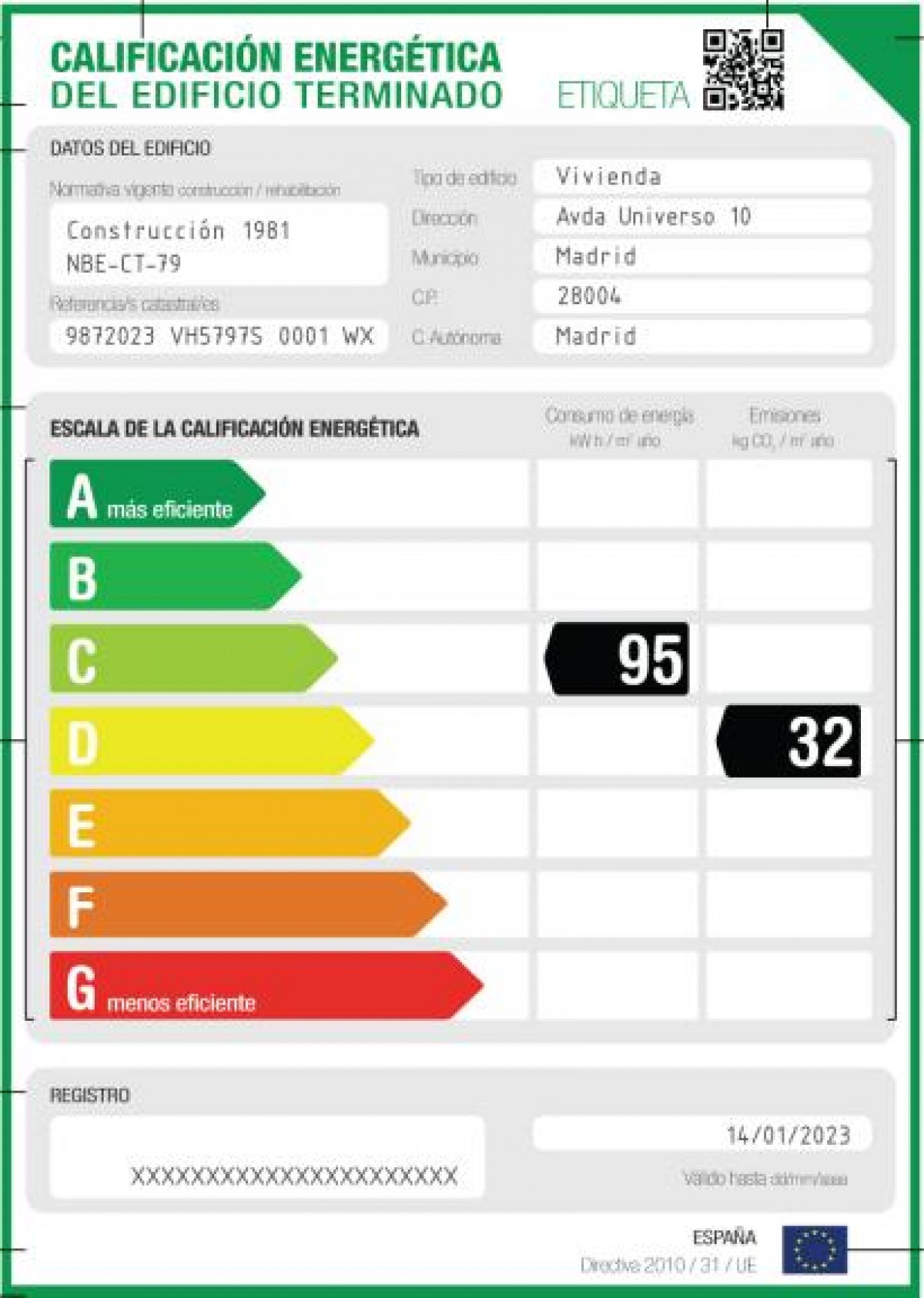
Energy Performance Certificate Explained
Raymundo Larraín Nesbitt, November, 7. 2016
By Raymundo Larraín Nesbitt
Lawyer – Abogado
7th of November 2016
In 2.013 a new law was passed (Royal Decree 235/2013) which requires all buildings in Spain to be issued an Energy Performance Certificate (EPC, going forward). Alternatively, some people refer to it as Energy Efficiency Certificate (or EEC). This change follows in the steps of other countries´ similar regulations, such as that of the United Kingdom. The self-admitted goal of this regulation is twofold; first, it aims to reduce the carbon footprint on our environment by nudging property owners to adopt more eco-friendly energy solutions. Additionally, it also empowers the choice of buyers and would-be renters by allowing them to gauge the energy efficiency consumption of their new home.
The significance of this new regulation is that it affects conveyancing in Spain. All properties being built, sold or rented must now produce this certificate so that a buyer or tenant can examine it and make an informed decision.
I have put up this small FAQ to explain what it consists on and which hopes to address the most commonly related queries.
What is an EPC?
Briefly, it is a report that classifies the efficiency of energy consumption by a home. It assigns an energy rating to each home on a scale which ranges from “A” (the most efficient) to “G” (the least efficient).
Who needs an EPC?
All properties in Spain being:
- built
- sold
- rented
When is an EPC required?
- On renting: this includes holiday rentals. The EPC will be produced by the landlord at the time of signing a Tenancy Agreement. A photocopy of it will normally be attached to the contract.
- On selling: whether it is a resale or new-build property, it is necessary to attain it prior to completion. A Notary witnessing completion will demand an original EPC as part of the vendor’s paperwork.
Duration of the EPC?
Ten years. After said time it must be renewed.
Consequences of not attaining an EPC?
- A Private Purchase Contract on a property can be annulled.
- Your Autonomous Community, where your property is located, may fine you on selling or renting without it in breach of Consumer Rights regulation. Fines range from €300 (light offence) up to €6,000 (very serious offence).
- The vendor or landlord may be forced to compensate a buyer (or tenant) for any damages caused.
EPC has Tax Benefits
Depending on the energy rating assigned to your home by the EPC, you could apply for a tax rebate from your local town hall as from 2.016 on paying IBI tax (akin to the UKs Council tax). The tax rebate follows a sliding scale; the higher the energy efficiency rating, the larger the tax discounted.
Letters "F" and "G" are not eligible for a tax discount.
• “A” rating: 20% discount
• “B” rating: 16% discount
• “C” rating: 12% discount
• “D” rating: 8% discount
• “E” rating: 4% discount
• “F” rating: nil
• “G” rating: nil
How much does it cost?
Prices vary widely; from low (providing your command of Spanish is spotless) up to several hundred euros (companies that can communicate with you in English). To this you must add VAT.
Besides the language requirement, the constructed surface of a dwelling influences as well the asking price of this certificate.
If you are being quoted more than €300 you are likely being overcharged (unless it is a villa).
Where can I get one?
Our law firm can arrange this service on your behalf for a flat fee of €285 plus VAT.*
*large villas have higher fees
Larraín Nesbitt Lawyers, small on fees, big on service.
Larraín Nesbitt Lawyers is a law firm specialized in conveyancing, taxation, inheritance, and litigation. We will be very pleased to discuss your matter with you. You can contact us by e-mail at info@larrainnesbitt.com, by telephone on (+34) 952 19 22 88 or by completing our contact form.
Legal services Larraín Nesbitt Lawyers can offer you
- Energy Performance Certificate
- Conveyancing – Buying
- Conveyancing – Selling
- Rentals
- Fiscal Representation (Non-Resident Income Tax)
- Will Service
Related articles
- Buying Distressed Property in Spain – 8th August 2011
- Buying Resale Property in Spain – 21st February 2013
- Buying Off-Plan Property in Spain – 8th of June 2013
- How to Buy Commercial Property in Spain – 4th July 2014
- How to Buy Rural Property in Spain – 8th August 2014
- How to Buy Property in Spain Safely – 10th October 2014
- Taxes on Selling Spanish Property – 8th December 2014
- Taxes on Buying Spanish Property – 8th July 2015
- Non-Resident Taxes in Spain – 8th December 2015
- Buying Property in Spain – 10 Reasons to Hire a Lawyer – 8th November 2016
Please note the information provided in this blog post is of general interest only and is not to be construed or intended as substitute for professional legal advice. This blog post may be posted freely in websites or other social media so long as the author is duly credited. Plagiarizing, whether in whole or in part, this blog post without crediting the author may result in criminal prosecution. VOV.
2.016 © Raymundo Larraín Nesbitt. All rights reserved
... Read more

Snagging List Explained
Raymundo Larraín Nesbitt, October, 28. 2016
By Raymundo Larraín Nesbitt
Lawyer – Abogado
28th of October 2016
Snagging is an informal expression used within the construction industry which is used to describe the process of defect identification and resolution on buying off-plan properties.
It is important that you ensure that if you are buying a newly built property that the snagging is finished to your satisfaction. Before making the final payment to a developer or builder, you should ensure that your home is finished to your required specification. Normally one or two months ahead of completion, developers will give you notice to book an appointment and allow you to check the property yourself. Good developers will always carry out stringent tests themselves and use best endeavours to put everything right before legal completion.
However, even with the best will in the world, sometimes things are overlooked only to be found faulty later. Ideally the inspection should be carried out before you move in so that the developer will have time to address all the problems before you complete. The main reason for this is that lawyers can practice a retention on completion (using the funds as leverage) until any flaws or pending works detected during the snagging are carried out to your approval. If you hand over all the monies at completion you lose your leverage to have the flaws fixed. Which is exactly why it is in your best interests to hold back your cards in this game and have the withheld funds acting as an ‘incentive’ to get the job done (to your satisfaction). This allows you to maintain the upper hand on negotiating.
It should be noted that lawyers do not carry out physical inspection of properties (snagging lists); we only examine the associated legal paperwork. Which is why I always strongly advocate clients to engage the professional services of a reputable surveyor. I have badgered relentlessly in previous articles on the usefulness of hiring a chartered surveyor. In my opinion it should be mandatory when it comes to purchasing off-plan or rural property (in fact, any kind of property in Spain). Ideally, your surveyor should be a fellow of the Royal Institute of Chartered Surveyors (RICS), so you are guaranteed they work to British standards. You should know that Spanish survey reports are very different from our own.
The cost of a valuation survey will be largely offset by the problems that are picked up by a seasoned professional. This valuable report can be then used by a lawyer to know what weak points to watch out for and which are likely to give problems down the line. The lawyer will then use this insight to his client’s advantage knowing what should be negotiated and worded into a Private Purchase Contract, prior to completion, to better protect the buyer’s interests or else to practice a retention at completion and withhold funds to secure the satisfactory resolution of the spotted flaws.
Off-plan Snagging Checklist
- Check for damp patches. These will become hands down the number one enemy of your Spanish property.
- Check for mould growths.
- Check for mismatched tiles.
- Check for leaking faucets.
- Check for flaked painting.
- Check for damaged appliances.
- Check for unsuitable drainage.
- Check that any shutters you have are secure, and if electric, that the switches work.
- Check for scratches and scrapes on the windows and on the walls.
Below is a list of questions that you may want to ask yourself before completing on any new-build property:
- Is the plasterwork finished well and without cracking and is the paintwork complete?
- Do the doors and windows open and close properly?
- Do you have electric, telephone and internet points as specified on the plan?
- Have all the electrical appliances that you agreed to buy, or that were to be included in the price, been installed?
- Has the tiling, grouting and painting been finished to your satisfaction?
- If your water has been connected, check that all the taps (including showers, baths, sinks and exterior taps) work and that the toilets flush correctly.
- If you have irrigation, does it work?
- Confirm whether water and electric will be and if not what date can you reliably visit the property with services connected. Most utilities cannot be contracted until after legal completion of the property and service providers vary as to when they can make the connections. Do not assume you will be able to use your property on the day of legal completion.
Take a record of any faults that you find and inform the developer as soon as possible, or alternatively ask your lawyer to raise any problems you find directly with the developer. Don´t forget to take a notepad and a camera, if you have one, on any snagging inspection so that you have a reliable record afterwards unless you follow my advice and hire a professional such as a chartered surveyor.
To close, and speaking strictly from personal experience alone, anecdotal evidence would seem to suggest that waterproof insulation standards in southern Spain (read against rainfall) are seriously found wanting when I compare them to their UK counterpart. I lived for five years in Edinburgh (read non-stop monsoon) and never once did I have damp patches or problems with rainfall. In southern Spain on the other hand, where rain is scant, damp patches sprouted after heavy rainfall specially in the fall. Take it from me, you may want to keep a close eye on roof insulation in Spain in new-builds.
Our law firm can provide you referrals of trustworthy chartered surveyors that work to UK standards. Ask us.
Larraín Nesbitt Lawyers, small on fees, big on service.
Larraín Nesbitt Lawyers is a law firm specialized in taxation, inheritance, conveyancing, and litigation. We will be very pleased to discuss your matter with you. You can contact us by e-mail at info@larrainnesbitt.com, by telephone on (+34) 952 19 22 88 or by completing our contact form.
Legal services Larraín Nesbitt Lawyers can offer you
- Conveyancing – Buying
- Conveyancing – Selling
- Fiscal Representation (Non-Resident Income Tax)
- Will Service
Related articles
- Off-Plan Construction Guarantees – 8th November 2011
- Licence of First Occupation Explained – 8th April 2013
- Bank Guarantees in Spain Explained – 8th April 2013
- Buying Off-Plan Property in Spain – 8th of June 2013
- House Hunting in Spain – Interview with The New York Times. June 2015
- Taxes on Buying Spanish Property – 8th July 2015
- Non-Resident Taxes in Spain – 8th December 2015
- How to inspect an off-plan property overseas – Q&A with The Sunday Times. July 2017
Please note the information provided in this blog post is of general interest only and is not to be construed or intended as substitute for professional legal advice. This blog post may be posted freely in websites or other social media so long as the author is duly credited. Plagiarizing, whether in whole or in part, this blog post without crediting the author may result in criminal prosecution. VOV.
2.016 © Raymundo Larraín Nesbitt. All rights reserved.
... Read more

Marbella Town Hall Approves Tax Reduction on Main Home Inheritance Transfer
Raymundo Larraín Nesbitt, October, 21. 2016
Hot on the tail of the Junta de Andalucía’s news to reduce the regional Inheritance Tax (featured in last month’s article on Inheritance Tax Novelties in Andalusia & FAQ on IHT in Spain) various town halls have jumped on the band wagon to apply their own reductions in Andalusia. As previously explained, town halls have devolved competencies on some minor aspects of IHT which allows them a certain degree of flexibility.
Amongst them is Marbella’s Town Hall which has taken the mantle onto itself to lower the Plusvalía tax that is borne on the estate transfer to heirs. In simple English this means that inheritors stand to pay less taxes on inheriting estates in Marbella – good news. The catch (bummer - why has there always got to be one?) is that it only applies to main homes; and low valued homes at that. In other words, it applies to permanent abodes.
The fiscal changes follow a sliding scale with an inverse correlation; the higher the value, the less the reduction:
- 95% reduction for main homes < €125,000
- 50% reduction for main homes > €125,000 < €200,000
- 20% reduction for main homes > €200,000 < €300,000
A reduction on the tax burden is always a welcome respite. As I always tirelessly point out in all my articles and blog posts, lowering the tax burden is the right way out of a recession as it fosters the attraction of foreign investments, kick-starts the local economy and spurs job creation.
Larraín Nesbitt Lawyers, small on fees, big on service.
Larraín Nesbitt Lawyers is a law firm specialized in inheritance, conveyancing, taxation and litigation. We will be very pleased to discuss your matter with you. You can contact us by e-mail at info@larrainnesbitt.com, by telephone on (+34) 952 19 22 88 or by completing our contact form.
Related Legal Service
Related articles and blog posts
- Non-residents: Six Advantages of Making a Spanish Will – 8th August 2012
- Buying and Owning Spanish Property through Companies: Pros and Cons – 7th March 2014
- Taxes on Selling Spanish Property – 8th December 2014
- Spanish Wills and Probate Law in light of European Regulation 650/2012 – 8th January 2015
- Changes to Spain’s Inheritance and Gift Tax Law – 21st February 2015
- Dispelling Spanish Inheritance Tax Myths – 8th August 2015
- Spanish Inheritance Tax for Non-residents (Part I) – 21st February 2016
- Spanish Inheritance Tax for Non-residents (Part II) – 8th March 2016
- Inheritance Tax Novelties in Andalusia & FAQ on IHT in Spain – 8th September 2016
Please note the information provided in this blog post is of general interest only and is not to be construed or intended as substitute for professional legal advice. This blog post may be posted freely in websites or other social media so long as the author is duly credited. Plagiarizing, whether in whole or in part, this blog post without crediting the author may result in criminal prosecution. VOV.
2.016 © Raymundo Larraín Nesbitt. All rights reserved.
... Read more

British Pension Reforms Could Boost Spanish Real Estate Market
Raymundo Larraín Nesbitt, April, 8. 2014
The British Chancellor George Osborne has announced sweeping changes giving British pensioners more freedom to spend their pension pots how they like, including on Spanish property. In this article, regular contributor Raymundo Larraín Nesbitt looks at the impact the new rules might have on the Spanish real estate market.
Photo credit: Andrew Winning / REUTERS
By Raymundo Larraín Nesbitt
Lawyer – Abogado
8th of April 2014
Chancellor of the Exchequer George Osborne has outlined in March the blueprint of what hands down is the most dashing pension reform in almost a century. His proposed changes for 2014 Budget mean that hundreds of thousands of people retiring each year will now have the freedom to take savings built up in a defined contribution pension as a cash lump sum, subject to their marginal rate of tax, instead of turning their savings into a guaranteed lifetime income in the form of an annuity. Osborne has effectively handed savers the control over their savings and pensions.
This unprecedented liberty, devised to woo the grey vote with next year’s general election in mind, has undone the financial shackles bogging down millions of pensioners that were forced to invest in annuities with meagre returns due to the ultra-low interest rates of the previous five years. In fact, the lowest on record over a fifteen-year period. This radical shakeup will allow anyone over the age of 55 who belongs to a private pension scheme (as opposed to a final-salary scheme) to take out their savings as a lump sum to spend or invest as they wish.
As from April 2015 savers will be able to access the entirety of their pension pot at any time after age 55, subject to income tax at marginal rates on three-quarters of the money. The ability to take the whole pension as one lump of income would mean someone with a £100,000 pension could take £25,000 tax-free and then withdraw the remaining £75,000 to spend or invest as they saw fit. However the £75,000 would be treated as income for that tax year, pushing the individual into the higher-rate tax band for the year. From April 2015, there will be no cap on the amount of money that savers can withdraw from this arrangement, so income can be varied to stay within the basic rate tax or even nil-rate threshold for the year if desired.
This daring reform allows pensioners unprecedented access to investment opportunities that fan out before them as well as poising a new set of challenges and risks. Where to invest responsibly their hard-earned money? I wonder. I think we can safely rule out Lamborghinis for now.
In my opinion there is nowhere safer than a crashed property market in a first-world country, such as Spain. The inherent risk of buying property has largely been factored out as property prices could barely fall any lower after seven years of continued drops. Moreover, Spain has now technically exited its gloomy seven-year recession marking the inflexion point which turns the tide and heralds a new cycle. The market is clearly picking up pace spurred by savvy foreign asset-hunters bagging themselves bargains under the sun.
Spanish House Prices Down Fifty Per Cent
In the wake of Spain’s real estate bubble implosion property prices have fallen 50 per cent across the board. It is widely acknowledged by reputed experts that the time to invest in Spanish real estate is ripe once again. Following up on Spain’s upbeat macro figures, high-profile investors, such as George Soros, Bill Gates or Wang Jianlin (China’s richest man), are heading the wolf pack swooping in the pick of the litter. A new dawn begins for the Spanish property industry offering unique once-in-a-cycle investment opportunities in a bottomed out market. Clearly a buyer’s market.
Chancellor Osborne’s landmark pensions reform has left the door ajar for shrewd pensioners wishing to escape the lethargic constraints of dull paltry annuity returns and profit instead from the bright opportunities offered by a dynamic crashed property market (either directly or indirectly through investment funds); much like high-flyers are busy doing already. The time has come for those savers wishing to be in the driver’s seat of their financial future and, through direct control, make a difference with double-digit returns (long-term). The chancellor’s bold reform levels the playing field and empowers pensioners to be on par with big-ticket investors at just the right investment moment to supplement meagre state pensions.
“Carpe diem” – Horace (seize the opportunity). Odes, book 1, number 11.
Leading Roman lyric poet during the time of Augustus (Octavian).
Larraín Nesbitt Lawyers, small on fees, big on service.
Larraín Nesbitt Lawyers is a law firm specialized in conveyancing, taxation, inheritance, and litigation. We will be very pleased to discuss your matter with you. You can contact us by e-mail at info@larrainnesbitt.com, by telephone on (+34) 952 19 22 88 or by completing our contact form.
Related articles
- Buying Resale Property in Spain – 21st February 2013
- Buying Off-Plan Property in Spain – 8th of June 2013
- Buying Bank Repossessions in Spain – 21st February 2014
- Buying Distressed Property in Spain – 8th August 2011
- Rent-to-Buy in Spain: The Smart Choice – 8th of April 2012
- Investor Guide to Spain’s Golden Visa Law – 8th of November 2013
- How to Buy Property in Spain Safely – 10th October 2014
I am indebted to the following sources:
- The Telegraph: Budget 2014: How will the new pensions system work? By Dan Hyde. 20/03/14
- Financial Times. By Josephine Cumbo, George Parker, Chris Giles, Sam Fleming and Jim Pickard. 20/03/14
- The Sunday Times business supplement. 23/03/2014.
Please note the information provided in this article is of general interest only and is not to be construed or intended as substitute for professional legal advice. This article may be posted freely in websites or other social media so long as the author is duly credited. Plagiarizing, whether in whole or in part, this article without crediting the author may result in criminal prosecution. VOV.
2.014 © Raymundo Larraín Nesbitt. All rights reserved.
... Read more
