
Blog / News

Making a Spanish will
Raymundo Larraín Nesbitt, January, 21. 2024
Marbella-based Larraín Nesbitt Lawyers has over 21 years' taxation & conveyancing experience at your service. We offer a wide range of over 50 legal and corporate services. Our team of native English-speaking lawyers and economists have a long track record successfully assisting expats all over Spain. You can review here our client’s testimonials.
Copyrighted © 2024. Plagiarism will be criminally prosecuted.
21st of January 2024
Why should you make a Spanish Will?
- To avoid time-consuming and expensive legal problems for your beneficiaries.
- If a non-Spanish resident dies in Spain without having made a Will, Spanish law will be applied to any assets in Spain.
- Inheritance law in Spain is much more restrictive than in the UK.
- However, Spanish Authorities will not oblige non-Spanish citizens to follow such Spanish inheritance laws provided that the correct Will is prepared.
What happens if I die without making a Spanish Will?
- Any assets in Spain will be subject to Spanish inheritance laws and will be distributed to the immediate family in pre-determined proportions.
- As in the UK, the absence of a Spanish Will means that you have no control over who benefits from your estate and there will be a delay while officials determine, in accordance with the law, which family members are entitled to which assets.
Making a Spanish Will
- A legal adult (i.e. 18 years and over) can make a Spanish will.
- The Will is made out in two columns, one in Spanish and one in English (or in whatever language is preferred).
- The Will is then checked by the Notary and signed in his or her presence.
- A valid passport should be taken along to the Notary. Some Notaries do not accept any other form of identity.
- The Notary keeps the original Will but will prepare an authorised copy for you.
- Notification of the Will is sent to the Central Registry of Wills in Madrid.
- It is only possible to make separate (not joint) Wills under Spanish law.
- It is not possible to make a Spanish Will by means of a Power of Attorney. You should personally sign the Wills in front of a Notary.
- There is no direct equivalent of a UK Executor who can carry out the testator´s wishes. There is a comparable function but it is highly complex and expensive, and specialist advice should be sought.
Obtain proper legal or tax advice
- Larran Nesbitt Abogados (LNA) can offer you solid legal advice when making your Will. If your assets are complicated or high in value, we can also arrange specialist tax advice.
Related legal services:
- Will-writing service
- Probate & Succession (inheritance tax)
- Death Certificate
- Spanish Inheritance Tax Assessment Report (SITAR)
At Larrain Nesbitt Abogados (LNA) we have over 21 years’ experience assisting clients buying, selling, or renting properties. We can also offer you a competitively priced accounting service to file your landlord taxes every tax quarter nationwide. We are also specialized in immigration & residency visas. You can contact us by e-mail at info@larrainnesbitt.com, by telephone on our UK line (+44) 07543 838 218, Spanish line (+34) 952 19 22 88, or by completing our contact form to book an appointment.
Larraín Nesbitt Abogados, small on fees, BIG on service.
2024 © Raymundo Larraín Nesbitt. All Rights Reserved.

Reminder - Q4 2023 Non-Resident Income Tax filing (NRIT)
Raymundo Larraín Nesbitt, January, 12. 2024
Marbella-based Larraín Nesbitt Lawyers has over 21 years' taxation & conveyancing experience at your service. We offer a wide range of over 50 legal and corporate services. Our team of native English-speaking lawyers and economists have a long track record successfully assisting expats all over Spain. You can review here our client’s testimonials.
Copyrighted © 2024. Plagiarism will be criminally prosecuted.
Just a gentle reminder to all non-residents, who own property in Spain and rent it out (whether long or short-term i.e. holiday home); you must file your Q4 2023 quarterly tax return now in January 2024. You are being taxed on your rental income for the previous three months: October, November, and December.
For 2023, the non-resident tax calendar is as follows:
- Q1 January – March. Filed on the first 15 days of April
- Q2 April – June. Filed on the first 15 days of July
- Q3 July – September. Filed on the first 15 days of October
- Q4 October – December. Filed on the first 15 days of January 2024
Our cut-off date to accept filing Q4 2023 non-resident tax returns is Friday the 12th of January 2024.
Please do not wait until the last moment to submit your quarterly tax return. We file this tax online all over Spain within 24 working hours.
We can offer you this tax service for a very competitive fee.
Our fee is 100% tax-deductible from the tax to pay.
The main highlight of our tax service is that we reduce your income tax by 70%, or more, on applying for lenient landlord tax relief on all your property-related expenses.
Contact us and pay less tax. If you overpay taxes in Spain, it's only because you want to.
Related tax service
Holiday Rental Accounting Service (HRAS)
Related taxation articles
- Holiday Rental Laws in Spain – 8th of March 2015
- Non-Resident Taxes in Spain – 8th December 2015
- Holiday Rental Laws in Andalusia (Decree 28/2016) – 8th of February 2016
- Renting in Spain - Landlord´s Taxation – 8th of January 2017
- Holiday Home Taxation in Spain – 8th of July 2017
- Holiday Rentals in Andalusia Made Easy – 3rd July 2017
- Non-Resident Income Tax – 8th December 2017
- Holiday Rental Accounting Service (HRAS) – 16th January 2018
- Holiday Rental Taxation in Spain – 8th July 2018
- Renting in Spain: are you still overpaying income tax every quarter? – 16th October 2018
- You are taxed at source on renting out in Spain – 30th November 2018
- Did you get an email from AirBnb over your Spanish tax details? – 21st December 2018
- Important information from the Spanish Ministry of Finance – 7th January 2019
- Property portals and rental platforms to pass on landlord details to the Spanish Tax Authorities. Are you prepared? - 12th January 2019
- Holiday lettings: VAT invoice dissected – 11th February 2019
- Requerimiento - Spanish tax agency's summons – 7th March 2019
- Save 70% on your landlord tax bill – 8th March 2019
- Spain's new rental law in 2019 – 8th March 2019
- 8 Tips for Buy-To-Let Success in Spain – 21st October 2019
- Rentals climb for the fifth consecutive year in Spain! – 12th February 2020
- Spanish Government caps rent hikes to 2% in 2022 – 1st April 2022
- Spanish Government extends the 2% rental cap a further 3 months – 21st June 2022
Please note the information provided in this blog post is of general interest only and is not to be construed or intended as substitute for professional legal advice. This article may be posted freely in websites or other social media so long as the author is duly credited. Plagiarizing, whether in whole or in part, this article without crediting the author may result in criminal prosecution. Ní neart go cur le chéile. VOV.
2.024 © Raymundo Larraín Nesbitt. All rights reserved.
... Read more
New court ruling opens the door (again!) for Sephardic Jews to apply for Spanish nationality
Raymundo Larraín Nesbitt, January, 8. 2024
Inset photo: Granada’s Albayzin, the Jewish district, where time stood still.
Marbella-based Larraín Nesbitt Lawyers has over 21 years' taxation & conveyancing experience at your service. We offer a wide range of over 50 legal and corporate services. Our team of native English-speaking lawyers and economists have a long track record successfully assisting expats all over Spain. You can review here our client’s testimonials.
Copyrighted © 2024. Plagiarism will be criminally prosecuted.
8th of January 2024
In 2015, under Spain’s former administration, a new law was passed (Ley 12/2015) which allowed all descendants of Sephardic Jews to apply for Spanish nationality. In practice, almost all applications were greenlighted and nationality was freely granted.
It has to be reminded that in 1492, the overzealous Spanish Catholic Kings purged Spain religiously, which included, besides expelling the Moors, also expelling all Jews, whose property was confiscated. As a result of this crass and unfair decision, Spain’s economy and business output would significantly decline over the next centuries. Due to this historic injustice, which long shadow has pursued Spain for generations, the 2015 law was passed to make amendments with its dark past and grant Spanish nationality to all living descendants of the Sephardic Jewish community who wished to take up the opportunity of recovering a sleeping Neshama.
With the change of administration in 2018, the application criteria became increasingly tighter, until in 2020 it almost grinded to a halt when almost all new applications were denied unless the certificate was issued by Spain’s Association of Sephardic Jews. This unofficial change translated in practice into denying almost all nationality applications.
A new key ruling from a Madrid judge has now overturned the Government’s restrictive practice to - once again - accept as valid proof any certificate issued by a Sephardic Jew Association, even if not based in Spain. This pivotal change in effect opens again the floodgates of applications which had inexplicably grinded to a halt. Although no official statement was released, the rumour mill suspected several of these foreign certificates were being forged. So, in practice, only certificates issued by Spain’s Sephardic Jew Association, which were a minority, were being accepted as valid by Spanish Authorities (i.e. notaries).
However, to dampen the light mood, it is highly foreseeable the current administration in office will challenge the new ruling which will bog - once again - all Sephardic Jew applications for Spanish nationality. Spain’s current political administration is not exactly simpatico with Israel, as over half of the government is pro-Hamas, including the president.
Spain, once more, goes out of its way to be on the wrong side of history.
At Larrain Nesbitt Abogados (LNA) we have over 21 years’ experience assisting clients buying, selling, or renting properties. We can also offer you a competitively priced accounting service to file your landlord taxes every tax quarter nationwide. We are also specialized in immigration & residency visas. You can contact us by e-mail at info@larrainnesbitt.com, by telephone on our UK line (+44) 07543 838 218, Spanish line (+34) 952 19 22 88, or by completing our contact form to book an appointment.
Larraín Nesbitt Abogados, small on fees, BIG on service.
2024 © Raymundo Larraín Nesbitt. All Rights Reserved.

Merry Christmas!
Raymundo Larraín Nesbitt, December, 21. 2023
From Larraín Nesbitt Abogados, we wish all our clients and friends a Merry Christmas and a Happy New Year!
The law firm will now remain closed for the holiday season and will reopen for business on Monday the 8th of January 2024.
---
Desde Larraín Nesbitt Abogados, deseamos a todos nuestros clientes y amigos unas muy Felices Fiestas y un próspero Año Nuevo.
El despacho permanecerá ahora cerrado por vacaciones y nos reincorporaremos el lunes 8 de enero 2024.
... Read more
Spanish Estate Agencies are now legally liable on offering properties without a Licence of First Occupation
Raymundo Larraín Nesbitt, December, 18. 2023
Marbella-based Larraín Nesbitt Lawyers has over 21 years' taxation & conveyancing experience at your service. We offer a wide range of over 50 legal and corporate services. Our team of native English-speaking lawyers and economists have a long track record successfully assisting expats all over Spain. You can review here our client’s testimonials.
Copyrighted © 2023. Plagiarism will be criminally prosecuted.
18th of December 2023
In a new landmark provincial ruling from Alicante (Orihuela Costa) an estate agency, that mediated in a property sale without a Licence of First Occupation, has been found guilty and will have to pay the buyer a substantial amount in compensation.
This new ruling opens the door to litigate against real estate agencies for compensation when they intermediate on property sales that have not attained a Licence of First Occupation. The ruling goes on to expand that it is the duty of estate agencies to only sell properties which have attained a LFO.
A Licence of First Occupation is a critical administrative document that allows humans to live in new-build properties (off-plan) for the first time or in resales (after heavy property improvements & extensions).
At Larrain Nesbitt Abogados (LNA) we have over 21 years’ experience assisting clients buying, selling, or renting properties. We can also offer you a competitively priced accounting service to file your landlord taxes every tax quarter nationwide. We are also specialized in immigration & residency visas. You can contact us by e-mail at info@larrainnesbitt.com, by telephone on our UK line (+44) 07543 838 218, Spanish line (+34) 952 19 22 88, or by completing our contact form to book an appointment.
Larraín Nesbitt Abogados, small on fees, BIG on service.
2023 © Raymundo Larraín Nesbitt. All Rights Reserved.

Non-Resident Imputed Income Tax end-of-year reminder (NRIIT) 2022
Raymundo Larraín Nesbitt, December, 1. 2023
The clock is ticking. If you are a non-resident, and you own property in Spain, this is your last chance to file your Non-Resident Imputed Income Tax for year 2022. Even if you do not rent it out, you need to file this end-of-year tax. We file taxes online all over Spain.
Marbella-based Larrain Nesbitt Abogados has over 21 year’s taxation & conveyancing experience at your service. Our team of native English-speaking lawyers and economists have a long track record successfully assisting expats all over Spain. You can review here our client’s testimonials.
Blog post copyrighted © 2023. Plagiarism will be criminally prosecuted.
By Raymundo Larraín Nesbitt
Lawyer – Abogado
1st of December 2023
The end of 2023 fast approaches.
One of our last blog posts for this year, is a gentle tax reminder.
All non-residents, who own property in Spain, need to file by the end of this year a tax called Non-Resident Imputed Income Tax (NRIIT, for short), even if you do not rent out your Spanish property. You are taxed on the previous year (2022).
We offer the following taxation service for a flat fee of 100 plus VAT/year.
We file your tax online within 24 hours.
Our last day to file this tax in 2023 is Monday the 18th of December.
We offer the most competitive fees in the market.
Non-Resident Imputed Income Tax (Fiscal Representation Service) 100/year
We are specialized in taxation
Larraín Nesbitt Lawyers, small on fees, big on service.
Larraín Nesbitt Lawyers is a law firm specialized in taxation, conveyance, immigration & residency, inheritance, and litigation. We will be very pleased to discuss your matter with you. You can contact us by e-mail at info@larrainnesbitt.com, by telephone on our UK line: (+44) 07543 838 218, or our Spanish line: (+34) 952 19 22 88, or by completing our contact form.
Legal & tax services available from Larraín Nesbitt Abogados (LNA):
- Non-Resident Income Tax (Fiscal Representation)
- Holiday Rental Accounting Service (HRAS)
- Registration of Holiday Homes (Andalusia)
- Spanish Inheritance Tax (IHT)
- Spanish Inheritance Tax Assessment Report (SITAR)
- Wealth Tax
- Spanish Resident Income Tax (IRPF)
- Tax form 720
Please note the information provided in this blog post is of general interest only and is not to be construed or intended as substitute for professional legal advice. This article may be posted freely in websites or other social media so long as the author is duly credited. Plagiarizing, whether in whole or in part, this article without crediting the author may result in criminal prosecution. VOV.
2.023 © Raymundo Larraín Nesbitt. All Rights Reserved.
... Read more
FORBES magazine picks Malaga as one of the top three places in the world to retire
Raymundo Larraín Nesbitt, November, 21. 2023
Marbella-based Larraín Nesbitt Lawyers has over 21 years' taxation & conveyancing experience at your service. We offer a wide range of over 50 legal and corporate services. Our team of native English-speaking lawyers and economists have a long track record successfully assisting expats all over Spain. You can review here our client’s testimonials.
Copyrighted © 2023. Plagiarism will be criminally prosecuted.
In a recent article published by Forbes (Kathleen Peddicord), Malaga was chosen as the best place in Spain to retire. Moreover, it was selected as one of the three best places in the world (along with Thailand and Panama)!
We have published over the years several articles covering why Malaga is such a great spot to invest and live in. Ultra-low taxation, deregulation, gorgeous weather all year round (over 300 days of sunshine a year!), modern medical facilities and state-of-the-art hospitals, amenities galore, a rich cultural life offering over a dozen museums, great food, a very safe city with almost no crime, and friendly natives to boot! You really can’t ask for more in life.
Oh, and it’s the home city of Picasso. Need I say more?
Malaga, Europe's Southern California - 11th June 2021
Malaga voted by expats as the world's second best city to live & work - 8th January 2022
Costa del Sol: your dream home in paradise – 8th April 2022
If readers followed my investment advice over the years, and invested in Malaga city, they’ve likely tripled their real estate investment by now. Not to mention double-digit rental income returns on holiday rental accommodation.
You’re welcome.
At Larrain Nesbitt Abogados (LNA) we have over 21 years’ experience assisting clients buying, selling, or renting properties. We can also offer you a competitively priced accounting service to file your landlord taxes every tax quarter nationwide. We are also specialized in immigration & residency visas. You can contact us by e-mail at info@larrainnesbitt.com, by telephone on our Spanish line (+34) 952 19 22 88, our UK line (+44) 07543 838 218, or by completing our contact form to book an appointment.
Larraín Nesbitt Abogados, small on fees, BIG on service.
2023 © Raymundo Larraín Nesbitt. All Rights Reserved.
... Read more
Granada, the Last Kingdom
Raymundo Larraín Nesbitt, November, 10. 2023
Lawyer Raymundo Larraín looks at Granada’s attractions as a place to live, visit, and invest.
I continue today with my running series on top places to buy and live in Spain. You can find older entries on this series scrolling down below. These impromptu light-hearted guides are not meant to be exhaustive; they are just there as a lighthouse to shed light on an area’s main highlights and landmarks.

Inset photo: the always majestic La Alhambra.


“These are the keys to paradise.” – Abu Abdallah Muhammad XII (Bobdil), the last Emir of Granada. Painter: Francisco Pradilla y Ortiz.
The painting depicts the moment Boabdil relinquishes the keys to the Emirate of Granada, the last Moorish stronghold in Spain, to King Ferdinand and Queen Isabella. The fall of Granada mirrors in reverse the fall of Constantinople in 1453, which led to the fall of the Eastern Roman Empire.
Introduction
1492 marks the fall of Granada, the last Islamic Kingdom to rule Spain (Al-Andalus) after almost eight centuries of uninterrupted dominion at the heart of Western Europe. The reconquest of the city signified the long-awaited reunification of Spain, the birth of a new nation, under the vigilant stare of the Catholic Kings. This epic moment galvanized the country, sending shockwaves throughout the land, which rallied behind its kings, as one. This historic milestone marked the start of a golden age for Spain which would last well over 250 years. During that time, Spain would go on to forge a mighty overseas empire that sprawled the world, from West to East, becoming history’s first modern-era superpower.
That same year also witnessed the discovery of a New World by Christopher Columbus, also at the behest of the Catholic Kings. Grizzled war veterans, from all corners of the country, after having spent all their adult lives waging a relentless war in pursuit of freedom, spurred on by the electrifying emotions of a reunified nation at long last, saw in the exploration of a new world a golden opportunity to carry over their skill set as Spanish Conquistadors – but that’s a tale for another day.
Centuries on, as a living testament to all the brave men and women who gave up their lives exploring and colonising unchartered lands, the Spanish language is now spoken by over half a billion people, in 22 countries, and is ranked as the world’s second-most important language.
Granada has gone on to symbolize the unity of Spain.

Catholic King’s tomb in la Capilla Real, Granada. For those eagle-eyed readers, you’ll spot on the right side that Isabella’s head seems to sink into her pillow more than Fernando’s. This was a gentle nod from the Italian sculptor to denote she was (much) smarter than him, and so her head weighed more. Clearly, we can surmise who was really in charge!
Granada, culture capital
Unlike its glitzier neighbours up and down the coast, devoted to beach & sunshine tourism, Granada appeals more to a refined crowd with cultural cravings and prone to introspection. Granada, like Oxford, is one of those few cities where everything seems to revolve around its university and academic life in general. Granada is ranked as one of the top universities in Spain to read Law, amongst many other degrees. The city is swarmed with university students at all times, which has created a vibrant cultural (night) life which reflects upon every little detail.
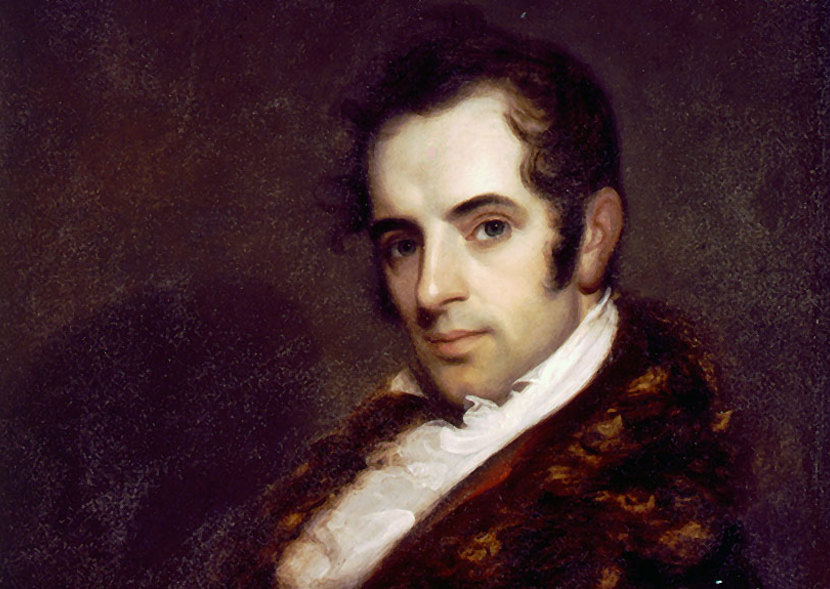
Washington Irving, the man who started it all
In a crime against Humanity, the Alhambra Palace, Granada’s emblematic Moorish citadel (which illustrates this very article) had been wrongfully neglected for centuries by Spaniards, lost to time. It would take a foreigner, a romantic American writer from New York City (!), to visit it during the nineteenth century and fall in love with it to finally appreciate its well-deserved beauty and put it on the map for the remainder of the world to enjoy. Inspired by its captivating ambience, echoing bygone eras, Mr. Irving was enthralled by its magic and found a way to actually live at the palace for several months which inspired him to pen two of his most famous novellas, The Conquest of Granada and Tales of the Alhambra (the latter inspired by Scheherazade, the masterful storyteller from One Thousand and One Nights). Mr. Irving found La Alhambra Palace derelict, in a state of major disrepair, inhabited by societies’ dregs and social outcasts. Soon after his novels were published, and word of mouth spread like wildfire, the Spanish Government was forced to take an active interest in the site, fencing the area off and finally carrying out works towards its rehabilitation and preservation for future generations.
Spain, and concretely Granada, owe a great debt of gratitude to this man, who single-handedly made the whole world aware of Granada’s beauty, making it an instantly recognizable brand the world over. His story deserves its own movie.
“Towards sunset the road, winding round a hill, brought us in sight of the famous little frontier city of Loxa, which repulsed Ferdinand from its walls. Its Arabic name implies “guardian,” and such it was to the vega of Granada, being one of its advanced guards…
…It is wildly picturesque; built along the face of an arid mountain. The ruins of a Moorish alcazar or citadel crown a rocky mound which rises out of the centre of the town. The river Xenil washes its base, winding among rocks, and groves, and gardens, and meadows, and crossed by a Moorish bridge. Above the city all is savage and sterile, below is the richest vegetation and the freshest verdure. A similar contrast is presented by the river; above the bridge it is placid and grassy, reflecting groves and gardens; below it is rapid, noisy and tumultuous. The Sierra Nevada, the royal mountains of Granada, crowned with perpetual snow, form the distant boundary to this varied landscape; one of the most characteristic of romantic Spain.”
Extract from “The Journey”, in Tales of the Alhambra.
—
“Dale limosna, mujer, que no hay en la vida nada, como la pena de ser, ciego en Granada”. – Francisco de Icaza, Mexican poet.
Loosely translated (referring to a street beggar): ‘Give him a coin woman, for there is nothing sadder in life than to be blind in Granada.’
—

Alhambra, seat of power
Majestically perched atop a hill, with commanding views over the surrounding countryside and the snowcapped mountain range of Sierra Nevada, the Alhambra (which means Red Castle in Arabic) was the seat of power of the Nasrid Dynasty and the Emirate of Granada from 1230 to 1492. The original fortress was built in the ninth century, over one thousand years ago. The palace served a dual role of projecting power (aggrandising its dynasty) and serving as their home. The castle’s rich crimson colour against the dramatic drop of a magnificent white mountain ridge behind it, which turns into dark purple at dusk, lends it an ethereal look, almost otherworldly.
The Islamic religion forbids the depiction of human figures, to that end talented Moorish artists were brought from faraway lands and commissioned to work feverishly, day in and day out, decorating its vast interiors and halls with stucco stalactites, intricate tilework, latticework bearing complex Moorish motifs, and symmetrical shapes. Each window at the Alhambra was thoughtfully selected to frame an image from the landscape that lies beyond in what resembles a living painting of unmatched beauty. The artwork found within its walls is an unparalleled example of Islamic art whose know-how is lost to the sands of time.
But truly, Alhambra comes into its own through its myriad scented gardens and water features. Adjacent to the Alhambra, we find the Generalife (UNESCO World Heritage Site since 1984), which was the Nasrid Dynasty’s summer palace. The Generalife’s gardens and fountains are inspired by the Jannah, Islam’s paradise garden that awaits the righteous in the afterlife as their final place of abode. The round fountains, that dot the palace grounds, playfully reflect the sun’s rays, resembling freshly minted silver dirhams. For this culture, born and bred in the hardships of unforgiving dry deserts, water is a synonym of wealth and power. For this reason, water fountains were prominently displayed throughout the whole palace complex conveying onlookers a distinct message of power. But they also served a practical purpose, as any visitor during the hot months of July and August can attest to; vastly reducing the sweltering heat by dropping the temperature in what is a feat of Islamic engineering. Complex waterways permeate the palace grounds ensuring ambient temperature remains cool at all times. The soothing sound of water running gently through the multiple waterways and fountains, coupled with the sweetly scented gardens and birds peacefully chirping away in the green canopy overhead makes the whole place truly unique; a balm for the soul.
It should be noted that in the aftermath of the fall of the Western Roman Empire, most of medieval Europe languished in the darkness of ignorance and poverty, albeit the Muslim Emirates of Cordoba and Granada shone brightly for centuries as a beacon of human culture. These two sophisticated kingdoms attracted the most talented scholars, philosophers, poets, astronomers, mathematicians and physicians (read doctors) of the time, becoming cusps of culture.
It is often forgotten the wise Emirate overlords oversaw the peaceful coexistence – for centuries – of three major cultures which are often at odds with each other, always hanging in a precarious balance: Christian, Muslim, and Jewish.

The Nasrid motto: ‘There’s no victor but God’
The Alhambra was aptly added in 1984 to the UNESCO World Heritage Sites.
In an October ’23 poll of the world’s most beautiful castles organized by the company ‘We Love Holidays’, the Alhambra was voted by readers as ranking first place in Spain, and third in the world. If you want to book tickets to visit it, you should do so at least six months ahead.

Patio de los Leones, La Alhambra.
—

“Weep like a woman for a kingdom you could not defend like a man.” – Aisha al-Hurra
Aisha bint Muhammad ibn al-Ahmar or Aixa al-Hurra (the honoured), a living descendant of the Prophet Muhammad, was the feisty, always the political player with a character of steel, determined mother of Boabdil, the last Emir of Granada. She earned her place in history for having rebuked her son for the loss of Granada in 1492.
—

Albayzin, where time stood still
Nestled at the foot of the royal palace, well beyond the protection of its sturdy walls, at the skirts of its mountain, lies the Albaicin; a small neighbourhood of well-preserved stone houses (dating back five centuries), amid cobbled streets, crisscrossed by narrow alleyways. The whole place is littered with souvenir shops which sell exotic wares from another time. The floors are covered by lush Oriental rugs bearing intricate symmetrical motifs, and vintage Moorish lamps, with embedded coloured crystals, hang from tall ceilings, illuminating each room, casting playful shadows on the walls which bring back to life figures from stories lost to time. The strong smell of tanned leather and sweet jasmine burning in large incense jars gently drifts through the air of its narrow streets taking visitors back in time.
The purpose of cramped streets is dual; they serve as defence (as easier to defend, think of the Strait of Thermopylae) but also help to create drafts which help to bring down the temperature during the hot summer months.
The Albayzin was home to the Jews, who were wrongfully expelled from Spain by the Catholic Kings in 1492, and all their properties confiscated in an ill-advised faux pas (saddled with debt, they did this to avoid repaying the large debts racked up on pursuing endless warfare). It is said the families descended from the original Sephardic Jews carefully treasured their original Granada housekeys, throughout the centuries, as family heirlooms passing them down from one generation to the next, waiting for the day they would be able to return safely to their rightful homes. These descendants, five centuries on, on visiting Granada, were shocked to find that when they inserted their keys on centuries-old locks, they worked! These keys symbolize the doorway to a sleeping Neshama.
The Albayzin was added in 1994 to the UNESCO World Heritage Sites.

Sacromonte, where flamenco’s spirit lives on
Due east from the Albayzin, on a small hilltop opposite the famed Alhambra, you’ll find the renowned Sacromonte district, home to the Roma community. Burrowed all alongside the mountain hillside you will find quaint house caves that do a marvellous job at keeping cool during the long summer season. During summertime, flamenco and guitar concerts abound. But this is not your vanilla run-of-the-mill tourist flamenco show, oh no, this is the real deal! Granada has a longstanding tradition of flamenco which loses its roots in time. The flamenco that burns here is raw, passionate, pulling at your very soul. Viewing a fiery flamenco show inside one of its reconditioned house caves is truly a sight to behold. Before you know it, night will turn into dawn. You can’t say you’ve lived if you haven’t experienced one of these flaming shows.

Trailblazing girl in motion!
Sierra Nevada, where the action lies!
Albeit man cannot live of culture alone. Sierra Nevada is a sky station only an hour’s drive away from Granada’s city centre. For ski lovers and adrenaline junkies, this is the place to be. It’s home to the highest mountain in all of Spain, the ever-icy Mulhacen, standing tall at 3,482 metres. There is a great selection of hotels, that cater to all tastes and pockets. For those with a penchant for the finer things in life, you should pay a visit to The Lodge or the Maribel hotels, right at the heart of the frozen ski slopes. Waking up in the wee hours of the morning and having breakfast at the Maribel at the crack of dawn (or dusk), with its beautiful views over an unspoiled piste, is truly a site to behold! Then being spoiled (rotten) to try on your ski gear, which has been previously warmed up overnight at the hotel’s ski shop, and ski right into la piste, is simply otherworldly! Now, that’s truly luxury at its best!
And then there’s also the night! Sierra Nevada has a rich and diverse nightlife where party owls can unwind and enjoy some well-deserved rest in good company after braving black slopes all day long. Shrewd cookies may even consider investing in property given the (always) high demand for ski accommodation and the limited land available due to strict planning laws!

Stunning viewpoint from the Mirador de San Nicolas, Granada. Breathtaking views are guaranteed at dawn and dusk. Rumour has it it’s a great place to propose, no lad has ever been turned down at this spot! Bruno Mars’s ‘Marry You’, whilst optional, is highly recommended.
Conclusion
Whether you lean more towards the arts, or else you’d rather fancy grabbing a snowboard and blaze the night away, Granada has you covered. Both crowds are guaranteed not to commingle.
Granada’s bewitching beauty, embodied by the Alhambra, has captured the imagination of writers and poets for eons. It’s witnessed the rise and fall of civilizations and dynasties, standing the test of time.
If you want your heart stolen, visit Granada.

Portrait of a young Federico García Lorca, arguably Spain’s finest poet.
Verde que te quiero verde.
Verde viento. Verdes ramas.
El barco sobre la mar
y el caballo en la montaña.
Con la sombra en la cintura
ella sueña en su baranda,
verde carne, pelo verde,
con ojos de fría plata.
Verde que te quiero verde.
Bajo la luna gitana,
las cosas le están mirando
y ella no puede mirarlas.
– Federico García Lorca. Romancero Gitano, Romance Sonámbulo.
Federico del Sagrado Corazón de Jesús García Lorca (1898 – 1936). Born in Fuente Vaqueros (Granada), he was a child prodigy, exquisite Spanish poet, writer, musician, playwright, and theatre director. Outstanding member of the Generation of 27. Assassinated at a young age by Nationalist forces shortly before the outbreak of the fratricidal Spanish Civil War for his Socialist views. His body was never found, his legend grows on. Likely the finest poet in Spanish language of all time, of any time.
Other entries in this running series:
- Costa del Sol: your dream home in paradise – 8th April 2022
- Sotogrande, the pearl of Cadiz – 3rd June 2022
- Barcelona, the beautiful – 8th November 2022
- Madrid, passion for life – 21st March 2023
- Mallorca: Heaven on Earth – 8th June 2023
Please note the information provided in this article is of general interest only and is not to be construed or intended as substitute for professional legal advice. This article may be posted freely in websites or other social media so long as the author is duly credited. Plagiarizing, whether in whole or in part, this article without crediting the author may result in criminal prosecution. Ní neart go cur le chéile. VOV.
2.023 © Raymundo Larraín Nesbitt. All Rights Reserved.
... Read more

Spain’s new Housing Law flops
Raymundo Larraín Nesbitt, November, 1. 2023
Marbella-based Larraín Nesbitt Lawyers has over 20 years' taxation & conveyancing experience at your service. We offer a wide range of over 50 legal and corporate services. Our team of native English-speaking lawyers and economists have a long track record successfully assisting expats all over Spain. You can review here our client’s testimonials.
Copyrighted © 2023. Plagiarism will be criminally prosecuted.
Surprise, surprise. Who would have guessed?
I dislike writing articles such as this one in which – unfortunately – we are proved right over time. But don’t take my word, almost every specialist working in real estate for decades could have also told you on reviewing the draft law that it was doomed to fail, as it in fact has.
Mark Stucklin, director of Spanish Property Insight (Spain's leading property think tank), published a nice take on this topic: New Housing-Law has crashed the rental market in just six months - 29th October 2023.
You also have interesting opinions from the Spanish financial press on this topic: Renting in Spain: Mission Impossible.
On the 26th of May 2023 Spain's new Housing Act was approved, which introduced a spate of changes to rental laws that apply nationwide. The self-declared purpose of this law was to significantly reduce the price of lettings across the board, introducing a state intervention on prices (rental prices are capped in some areas). This was done with a lofty goal in mind, to assist vulnerable collectives, such as youngsters, and elderly persons, on low wages or on precarious pensions.
To cut a long story short, we repeatedly analyzed and explained - through multiple articles - why the new proposed measures introduced by this law were in practice a bad idea (polite understatement) and how it would prove counterproductive for the overall rental market, despite the goal being good.
The road to hell is paved with good intentions.
As examples:
Government to introduce rental control in 2021 - 28th October 2020
Spain’s new Housing Act - 5th November 2021
A brief look at Spain’s new Housing Act - 8th November 2021
Spain to approve new Housing Act - 12th February 2022
Property portal IDEALISTA reports rentals in Barcelona plummeted by 14% following the approval of Spain’s new Housing Law of 2023 -15th July 2024
Lo and behold, six months later we can affirm that this new law is a (total) failure. I know, shocking.
If anything, this new law has made matters (much) worse for prospective tenants, specifically for struggling collectives (read financially challenged).
I really wish the government listened to experts at times, removing its ideological bias which blinds it, before rashly enacting such ideologically-motivated housing laws that in practice fall flat on their face, making matters worse for us all; specifically for the vulnerable collectives it sought to protect.
So, what now?
Is anyone going to be held accountable for these misguided housing policies?
Is anyone going to be held responsible for making rentals MUCH more expensive, as landlords have in effect greatly reduced the offer available increasing rental prices as a result (following the law of demand and supply)?
Of course not, this is Spain! No one ever resigns, for any reason.
They’ll just blame it on 'evil' foreign speculators and on ongoing wars to hide their own incompetence and shortcomings. It’s always someone else’s fault, right? In the public sector this is how they roll, no pasa nada. In the private sector, people would get fired over botching Spain’s rentals market.
Ah politicians, you gotta luv’em; they spice up our lives like the clowns they are.
Ah well, life goes on.
At Larrain Nesbitt Abogados (LNA) we have over 20 years’ experience assisting clients buying, selling, or renting properties. We can also offer you a competitively priced accounting service to file your landlord taxes every tax quarter nationwide. We are also specialized in immigration & residency visas. You can contact us by e-mail at info@larrainnesbitt.com, by telephone on (+34) 952 19 22 88, or by completing our contact form to book an appointment.
Larraín Nesbitt Abogados, small on fees, BIG on service.
2023 © Raymundo Larraín Nesbitt. All Rights Reserved.
... Read more
Happy Halloween!
Raymundo Larraín Nesbitt, October, 27. 2023
Anál nathrach, orth' bháis's bethad, do chél dénmha
... Read more
