
Ibiza: Party island
Raymundo Larraín Nesbitt, March, 21. 2026
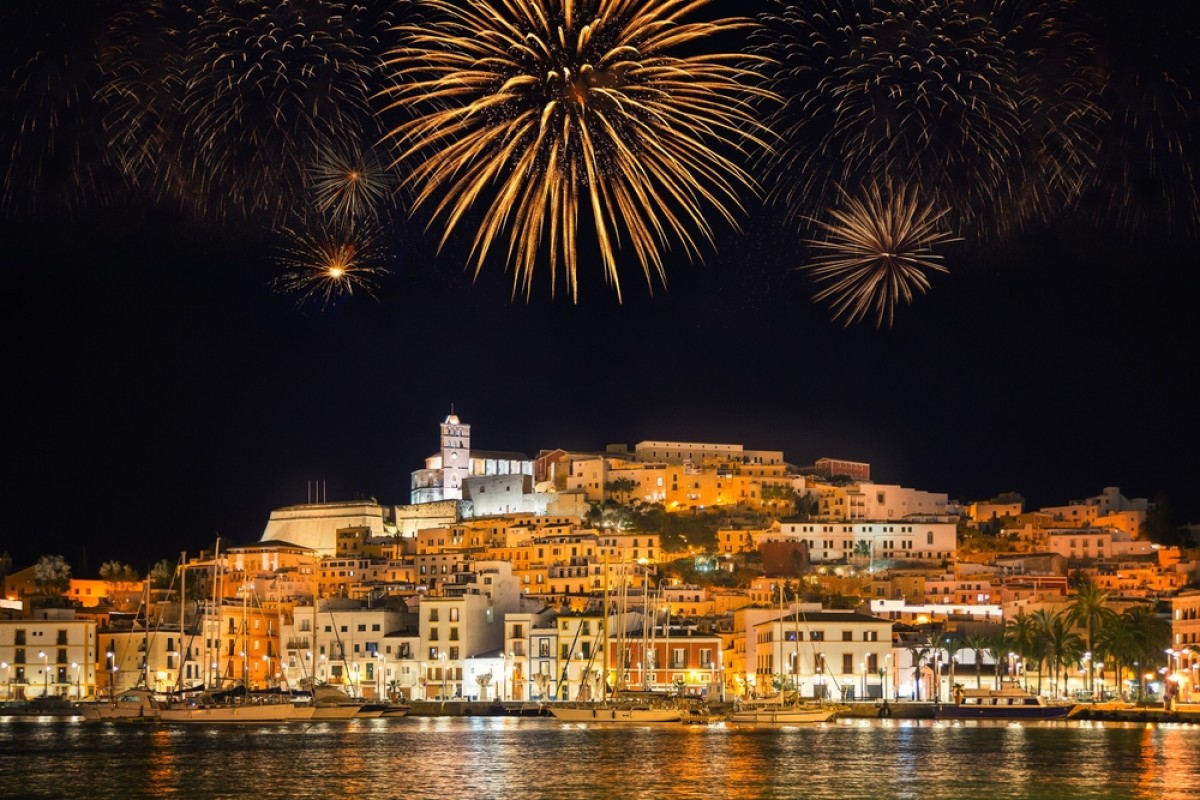

Ibiza Old Town at nightfall
21st of March 2026
I continue today with my running series on the top places to buy and live in Spain. You can find older entries on this city-guide series by scrolling down below. These impromptu light-hearted guides are not meant to be exhaustive; they act as a lighthouse, shedding light on an area’s main highlights and landmarks.

In the Old World, Bes was the deity who represented joy, music, and sexual pleasure
Introduction
Ibiza is the third largest of the four islands that form the Balearic Islands, an archipelago off eastern Spain, located in the Mediterranean Sea.
Ibiza’s history spans over 2,600 years. Founded by Phoenician seafarers, it occupies a strategic outpost and was aptly named Ibosim ("Island of Bes"), dedicated to the Egyptian god Bes. In the Old World, Bes was the deity who represented joy, music, and merriment. Indeed, unbeknownst to its first settlers, the island was fittingly named.
Ibiza exemplifies — like no other place on earth — the sense of joy, music, and sweet hedonism. Ibiza is renowned the world over as the party island par excellence, where revellers enjoy nightlife to its fullest until the crack of dawn.
There are two distinct sides to Ibiza; the first one is a spiritual facet, embodied by its colony of artists and savants, which can be found during the daytime, and which draws inspiration from its pristine azure coves, white sandy beaches, gently rolling thyme hills and golden sky dusks. The second one, found at nightfall, is the hedonistic Ibiza, enjoyed by bon vivants and embodied by its night temples (known as discos), administered by priests known as DJs, with their relentless pulsating electronic beats which pull at your soul.
Both Ibizas work in tandem; they draw and feed from each other synergistically, from dawn to dusk, under a mantle of stars.
Which Ibiza appeals to you?

Cala Saladeta, with its turquoise waters and white sandy beaches. A green canopy of pine trees extends over the adjacent rolling hills.
A unique Mediterranean identity
At just 572 square kilometres, Ibiza may be smaller than some of its neighbours, but what it lacks in size it more than (over)compensates for in spirit and boundless energy. Ibiza was awarded on the 4th of December 1999 a UNESCO World Heritage Site for its unique blend of cultural, historical, and biodiversity assets. Sites such as remnants of ancient cities (the Puig des Molins Necropolis) and the fortified Dalt Vila — an impressive fortress perched atop Ibiza’s Old Town — connect the island’s present to its deep past.
The island’s terrain is a mosaic of salty wetlands, aromatic herb fields, gently pine-covered hills and glittering shores. Parc Natural de Ses Salines, a protected reserve shared with neighbouring Formentera, teems with birdlife and reflects the island’s commitment to preserving its natural heritage for future generations.

Cala Salada, another quiet cove with azure crystal waters. Perfect spot to commune with Mother Nature during the daytime.
Day & night: The two faces of Ibiza
There is a reason the island’s nickname is “The White Isle”. Whitewashed villages and sun-bleached beaches stretch out lazily for miles until where the land meets the sky, offering serenity and slow-paced Mediterranean living by day. For countless travellers, discovering hidden coves, exploring inland hill towns, indulging in local cuisine and sipping herbal-infused drinks as the sun sets below the sea on the distant horizon are highlights of any visit.
But truly, it is at nightfall when Ibiza comes into its own and springs to life. World-renowned bars such as Sant Antoni’s Café Mambo set the stage for nights that pulse with music, while legendary clubbing culture — shaped in part by Balearic beat and DJ-led innovations — has influenced electronic music worldwide.
Even if the superclub era has evolved and some iconic venues now occupy a mysterious, abandoned place in time, the island’s nightlife legacy remains an iconic chapter of its character.

Dusk falls on Cala d'Hort beach. A popular spot during the summertime. It has a fantastic view of the mysterious island of Es Vedra.
Ibiza: Sun, sea & soul
During the daytime, explorers can get lost visiting its myriad natural landmarks and pristine sandy beaches. Ibiza — or Eivissa in Catalan — is one of Spain’s most evocative Mediterranean gems. It is an island full of contrasts, where ancient history meets avant-garde energy, serene coves sit alongside buzzing harbours, and a growing emphasis on sustainable living reshapes life here for both residents and visitors alike.

Clubbing at Pacha, Ibiza.
Ibiza: Temples of the night
These temples of hedonism are tended by night priests known as DJs. Several renowned names claim the spotlight, including French artist David Guetta, Calvin Harris, Keinemusik, Carl Cox, PAWSA, Fisher, Paul van Dyk, Marco Carola, and Solomun.
But truly, it is the night temples that steal the limelight, burning bright. To name a few, and in no particular order:
- Amnesia: Was awarded the Best Global Club in 2007, 2008, 2009 and 2011. Its foam parties are world-renowned.
- Pacha: Is hands down the most iconic disco. Founded in 1973, it has branched out to 10 countries.
- Ushuaia: Is a beach club with swanky music. Has a large swimming pool with multiple islets for go-go dancers.
- Bora Bora: Another beach club.
- Privilege: Is the largest disco club in the world with a capacity of 10,000 clubbers.

Ibiza go-go dancers entertaining the crowds
Culinary & cultural richness
Ibiza’s food scene reflects its Mediterranean roots. Fresh seafood, hearty stews and rich desserts like greixonera (a lemon-scented tart) and flaó (a mint-flavoured cheesecake) punctuate menus in seaside chiringuitos and hidden eateries alike. Local drinks such as hierbas ibicencas, an aniseed-flavoured spirit, capture the island’s intoxicating blend of taste and tradition.
Beyond food, the island’s artistic pulse thrives in art galleries, music festivals and creative spaces abound. From ancient museums to contemporary sculptural installations that dot landscapes and seafronts, Ibiza nurtures a vibrant cultural life that rewards both the curious and the connoisseur. Ibiza’s creative energy is harnessed by its local artists, who channel it to create works of art and music for the enjoyment of us all.

Traditional Flao mint-scented cheesecake, worth trading your soul for
A property market defined by scarcity & prestige
For many, Ibiza is more than a holiday destination; it’s a lifestyle investment — literally. The property market is shaped by finite land, protective zoning and high international demand. Nearly half the island’s land is preserved or protected, and strict planning rules mean new-build opportunities are limited, insulating local values from swings in oversupply.
As of 2026, average prices on Ibiza hover around €7,000 per square metre, with prime waterfront districts easily exceeding that figure. Detached coastal villas, especially with uninterrupted sea views, can command values far above the norm, beyond €7,500 - €10,000 per square metre in sought-after zones.
Foreign purchasers remain a significant factor in the market, drawn by global prestige, a Mediterranean climate and a culture that blends leisurely days with international flair. A limited supply of stock and steady demand ensure resilient price stability and long-term capital appreciation.
However, Ibiza’s popularity isn’t without its housing challenges. Housing costs — both for sale and rent — have increased substantially across the island, prompting public debate about affordability, local access to housing and sustainable development for residents and workers alike.

Group of friends celebrating with mojitos at a chiringuito (beach club)
Ibiza’s future: balance is key
Ibiza faces the same predicament many iconic destinations have experienced: preserving its soul and identity while accommodating roaring success. Local planning policies now aim to curtail illegal tourist rentals and manage overtourism responsibly, reshaping how visitors engage with the island and reinforcing quality over sheer volume.
In the end, Ibiza’s true allure lies not just in its beaches or clubs, but in the contrast of experiences it offers. From tranquil mornings amid the sweet scent of wild thyme hills, evenings of fine dining al fresco and beguiling sunset views on an infinite golden sea to warm nights of untold pleasures that echo with the electronic beat of its music long after sunrise.
Ibiza’s future lies in striking the right balance between preservation and innovation.

Luxury yachts moored in Cala D'Hort beach
Conclusion
The spiritual side of Ibiza inspires its artists, gentle poets and intellectuals, fostering creativity. Whether you're attracted to its jaw-dropping landscapes, magic sunsets over a dashing blue sea, or historic landmarks, Ibiza draws you in. Visitors find themselves captivated by the island's cultural and natural treasures, ensuring a memorable experience.
Albeit where Ibiza’s heart truly lies, and is at its best, is with the rhythmic pulsating beat of its colourful nightlife. Making Bes proud, Ibiza embodies — like no other place — wanton release and merriment under a Mediterranean starry sky.
This synergistic duality — spirituality and unrestrained hedonism — neatly combine to define Ibiza, making it its hallmark.
If you haven’t partied in Ibiza, you haven’t lived.
Ibiza, isla del placer.
Ibiza, party island.
Other entries in this running series:
- Costa del Sol: your dream home in paradise – 8th April 2022
- Sotogrande, the pearl of Cadiz – 3rd June 2022
- Barcelona, the beautiful – 8th November 2022
- Madrid, capital splendour – 21st March 2023
- Mallorca: Heaven on Earth – 8th June 2023
- Granada, the Last Kingdom – 12th October 2023
- Seville, a dream city – 21st March 2024
- Malaga, passion for life – 16th September 2024
- Valencia, land of the brave – 21st March 2025
- Santiago de Compostela: The road to God – 16th September 2025
- Ibiza: Party island – 21st March 2026
Please note the information provided in this article is of general interest only and is not to be construed or intended as substitute for professional legal advice. This article may be posted freely in websites or other social media so long as the author is duly credited. Plagiarizing, whether in whole or in part, this article without crediting the author may result in criminal prosecution. Ní neart go cur le chéile. Voluntas omnia vincit.
2.026 © Raymundo Larraín Nesbitt. All Rights Reserved.

